COMPARE
Add product to compare
COMPARE
Add product to compare
Enable Cookies
Our website uses cookies, pixels, and similar technology (“Cookies”) to improve your online experience. By clicking “Accept All,” you consent to our use of all Cookies to personalize your experience, serve targeted advertisements, perform analytics, and for other business purposes. You may block some Cookies by clicking “Reject,” or change your cookie settings by clicking “Preferences.”
By using our website, you acknowledge this notice, and by clicking “Accept All,” “Reject,” or “Preferences,” you agree to our Website Terms of Use. See our Cookie Notice and Privacy Policy to learn more.
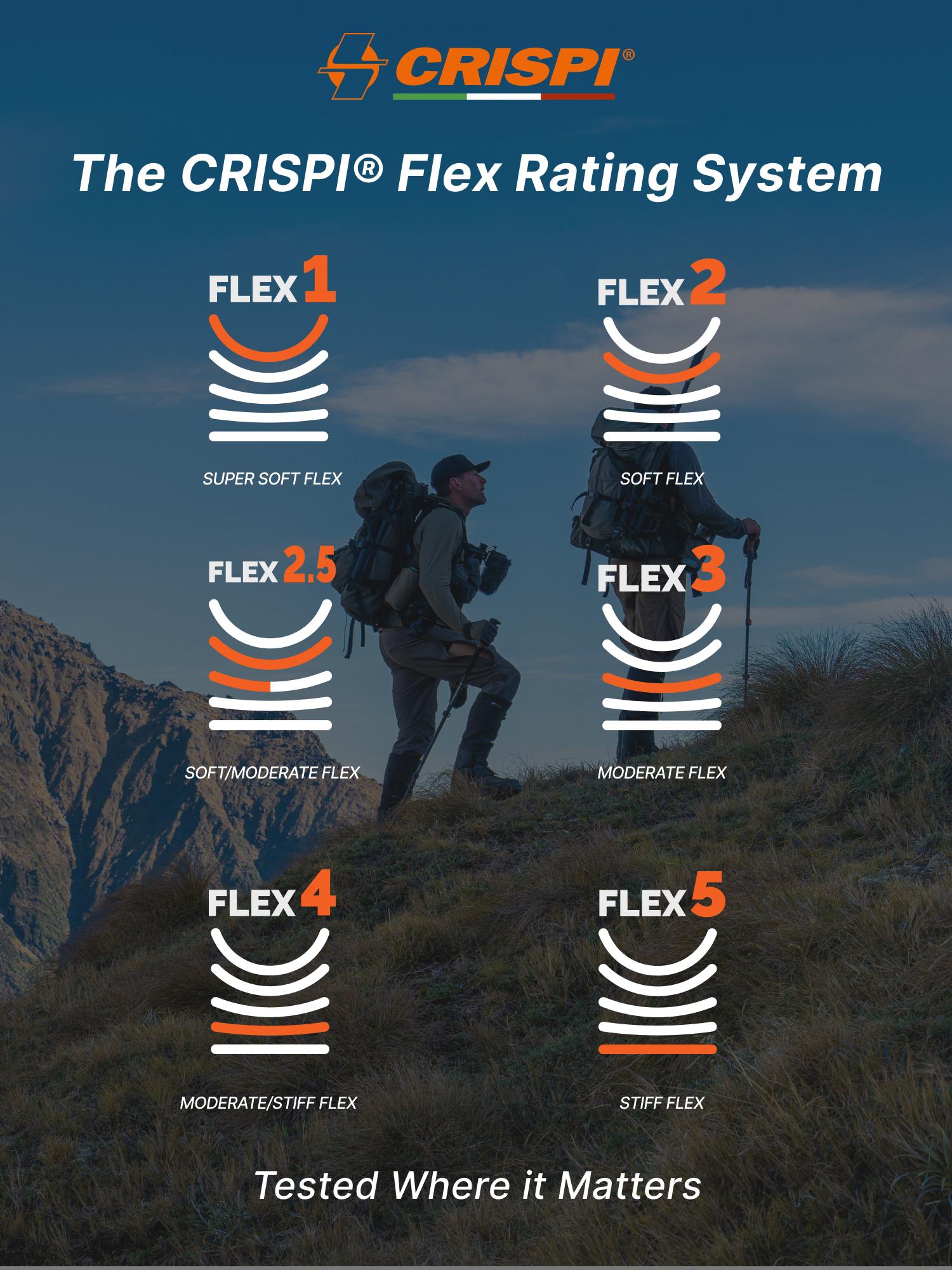
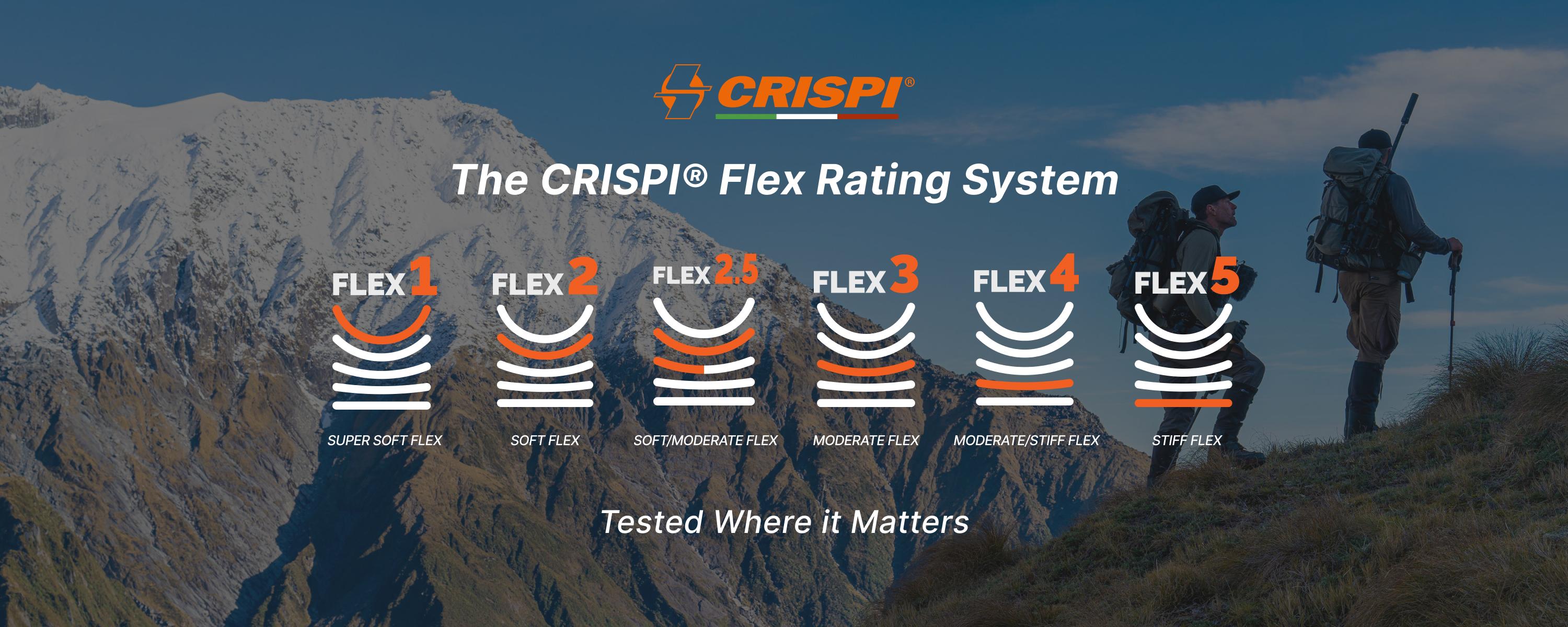
A hunting boot’s Flex Rating describes how stiff or flexible the boot feels underfoot and through its overall support structure. Lower numbers indicate greater flexibility, while higher numbers indicate greater stiffness, structure, and support.
The CRISPI® Flex Rating System uses a 1–5 scale to help hunters understand boot flex and choose the right level of support for their terrain, pack weight, hunting style, and personal preference.
Jump To:
Flex describes how much structure a hunting boot provides while allowing the foot to move.
A lower Flex Rating means a more flexible boot with greater freedom of movement and ground feel. A higher Flex Rating means a stiffer, more structured boot designed to provide increased support and stability as terrain and loads become more demanding.
The CRISPI® Flex Rating System ranges from 1 to 5, with Flex 1 representing the most flexible construction and Flex 5 representing the stiffest.
Flex is one of the most useful characteristics to consider when choosing a hunting boot because the right amount of structure depends on how and where you hunt. A boot designed for covering miles on relatively forgiving terrain does not necessarily need the same level of stiffness as a boot built for steep, technical mountain terrain with a heavy pack.
The CRISPI® Flex Rating System dates back to 2017, when CRISPI USA started using a numbered 1–5 scale to explain the stiffness and performance characteristics of its footwear.
At the time, terms like soft, stiff, and supportive could mean different things to different hunters. CRISPI® developed a simple, consistent way to communicate where a boot fell on that spectrum and help customers understand how its construction would perform in different applications.
By 2017, CRISPI® was assigning individual models a Flex Rating from 1 to 5 across its footwear lineup. The rating gave hunters a consistent way to understand the relative flexibility and structure of each boot before putting it to use.
Nearly a decade later, the CRISPI® Flex Rating System remains a fundamental part of how CRISPI® categorizes and explains its footwear.
One scale. Five levels of flex. A more clear way to choose your boot.
The CRISPI® Flex Rating System ranges from 1 to 5, with Flex 1 representing the most flexible construction and Flex 5 representing the stiffest. Each rating describes the overall flex characteristics of the boot and helps hunters match boot structure and support to terrain, pack weight, and hunting style.
| Flex | Feel | Terrain & Performance | Typical Applications |
|---|---|---|---|
| 1 | Very Flexible | Maximum flexibility and ground feel | Everyday, ranch, work, lifestyle and light trails |
| 2 | Flexible | Flexible, comfortable and mobile with added structure | Scouting, hiking, backpacking, stalking and high-mileage hunting |
| 2.5 | Soft/Moderate | More support for varied terrain without a traditionally stiff feel | Rolling hills, foothills, desert and lower mountain terrain |
| 3 | Moderate | Balanced flexibility, support and torsional stability | Versatile hunting, moderate-to-steep terrain and backpack hunts |
| 4 | Stiff | Increased structure and stability for demanding terrain and loads | Steep, rocky terrain, high-country hunting, heavier packs, sheep and mountain goat |
| 5 | Very Stiff | Maximum structure and stability | Extreme alpine, highly technical terrain, mountaineering and specialized mountain hunting |
The Flex Rating provides a starting point, but the number alone doesn't tell the entire story. The construction of each individual boot influences how that flex feels and performs underfoot.
Flex isn't determined by a single component of the boot. It is the result of the upper, Dynamic Frame, midsole, outsole, board last, and overall construction working together.
CRISPI® calls this approach Dynamic Construction.
The Dynamic Frame provides the structural foundation of the boot, connecting the upper and sole while influencing how the boot flexes, supports the foot, and responds to uneven terrain.
A softer construction allows the foot to move more naturally and provides greater flexibility and ground feel. As the construction becomes stiffer, the boot provides more structure and support for steep terrain, side-hilling, technical ground, and heavier loads.
The materials matter, too. Two boots with the same Flex Rating can have different materials and construction characteristics that affect how they feel on the foot. A leather upper, for example, can adapt and become more supple as it conforms to the foot, while a synthetic upper may maintain a more consistent and structured feel.
The Flex Rating is therefore a measurement of the boot's overall flex characteristics—not one individual component.
The interaction of CRISPI®'s Dynamic Construction, upper materials, midsole, and outsole contributes to how each boot flexes, supports, and performs underfoot.
[Learn more about the Three Pillars of CRISPI Dynamic Construction →]

Choosing the right Flex Rating starts with three things: terrain, load, and hunting style.
The more technical the terrain, the more useful additional structure and stability can become.
Flat and rolling terrain generally requires less boot structure. Steep side-hilling, talus, shale, loose rock, and alpine terrain place greater demands on the boot and can benefit from a higher Flex Rating.
That doesn't mean every mountain hunt requires the stiffest boot available. The amount of technical terrain, the distance you expect to cover, and how you move through the country all matter.
Pack weight also affects how much support you may want from your boots.
As the load increases, a stiffer boot can provide additional structure and stability underfoot, particularly on steep or uneven terrain. Hunters carrying lighter daypacks may prefer the mobility and ground feel of a more flexible boot, while hunters carrying heavier loads through technical country may benefit from additional structure.
Think about how you move through the country.
If you cover long distances and prioritize flexibility, mobility, and ground feel, a lower Flex Rating may be preferable.
If your hunts involve steep terrain, heavy loads, or technical mountain travel, a higher Flex Rating may make more sense.
Your hunting style matters because two hunters can travel through the same general area and have very different footwear preferences.
If you want one boot that can cover a wide range of hunting conditions, Flex 3(Moderate) provides a versatile middle ground.
If you hunt dramatically different terrain throughout the year, having boots with different Flex Ratings can allow you to match your footwear more specifically to each hunt.
And don’t choose Flex based on species alone. An elk hunt could mean flat timber, desert country, steep alpine terrain, or anything in between. Terrain, elevation, pack weight, and hunting style are better indicators of the Flex Rating you need.
A stiffer hunting boot isn't automatically a better hunting boot. The right amount of stiffness depends on the demands of the hunt.
A stiffer boot can provide additional structure and stability in steep, technical terrain or under heavier loads. A more flexible boot can provide greater mobility, ground feel, and freedom of movement while covering long distances.
The goal is to match the amount of structure to the terrain, load, and way you hunt.
A boot that is stiffer than you need may feel unnecessarily restrictive, while a boot that is too flexible for the terrain and load may not provide the level of support you want.
Flex can influence how a boot feels while walking, but comfort isn't determined by Flex Rating alone.
Fit, upper materials, footbed, midsole construction, boot shape, and the way the boot interacts with your individual foot all contribute to comfort.
In general, more flexible boots can feel more natural and forgiving underfoot, while stiffer boots can provide a more structured and supportive feel. Neither is inherently more comfortable. The right choice depends on the individual hunter and the demands of the hunt.
Break-in can also vary between models. Materials such as leather can adapt to the foot over time, while synthetic materials may maintain more of their original structure.
For that reason, Flex Rating should be considered alongside fit and construction when selecting a hunting boot.
Flex, boot height, and fit are three different characteristics.
Flex Rating describes how the boot is designed to behave underfoot.
Boot height determines coverage around the ankle and lower leg, which can be important for protection, snow, and other environmental conditions.
Fit determines how well the boot works with your individual foot.
A taller boot doesn’t automatically have a higher Flex Rating, and the right Flex Rating can’t make up for a poor fit.
When trying on hunting boots, pay attention to heel movement, toe room, forefoot width, pressure points, and overall foot lockdown.
A Flex Rating describes the relative stiffness and flexibility of a hunting boot. Lower numbers indicate more flexibility, while higher numbers indicate greater stiffness and structure.
Flex 5 (Stiff) is the stiffest rating in the CRISPI® Flex Rating System.
Flex 3 (Moderate) sits in the middle of the scale and provides a balance of flexibility, support, and stability for a broad range of hunting terrain.
There isn’t one Flex Rating for elk hunting. Elk hunts can range from flat timber and rolling terrain to steep, technical mountain country. A Flex 2 (Soft), 2.5 (Soft/Moderate), 3 (Moderate), or 4 (Moderate Stiff) may be appropriate depending on terrain, elevation, pack weight, and hunting style.
Sheep hunting often involves steep, rocky, and technical terrain, making Flex 4 (Moderate/Stiff) or Flex 5 (Stiff) appropriate choices depending on the specific terrain, load, and hunter preference.
Yes. Flex is influenced by the entire boot construction, including the upper, Dynamic Frame, midsole, outsole, and board last. Two boots with the same rating can have different materials and construction characteristics that affect how they feel underfoot.
The right Flex Rating comes down to how and where you hunt.
Know the terrain. Know the load. Choose your flex.
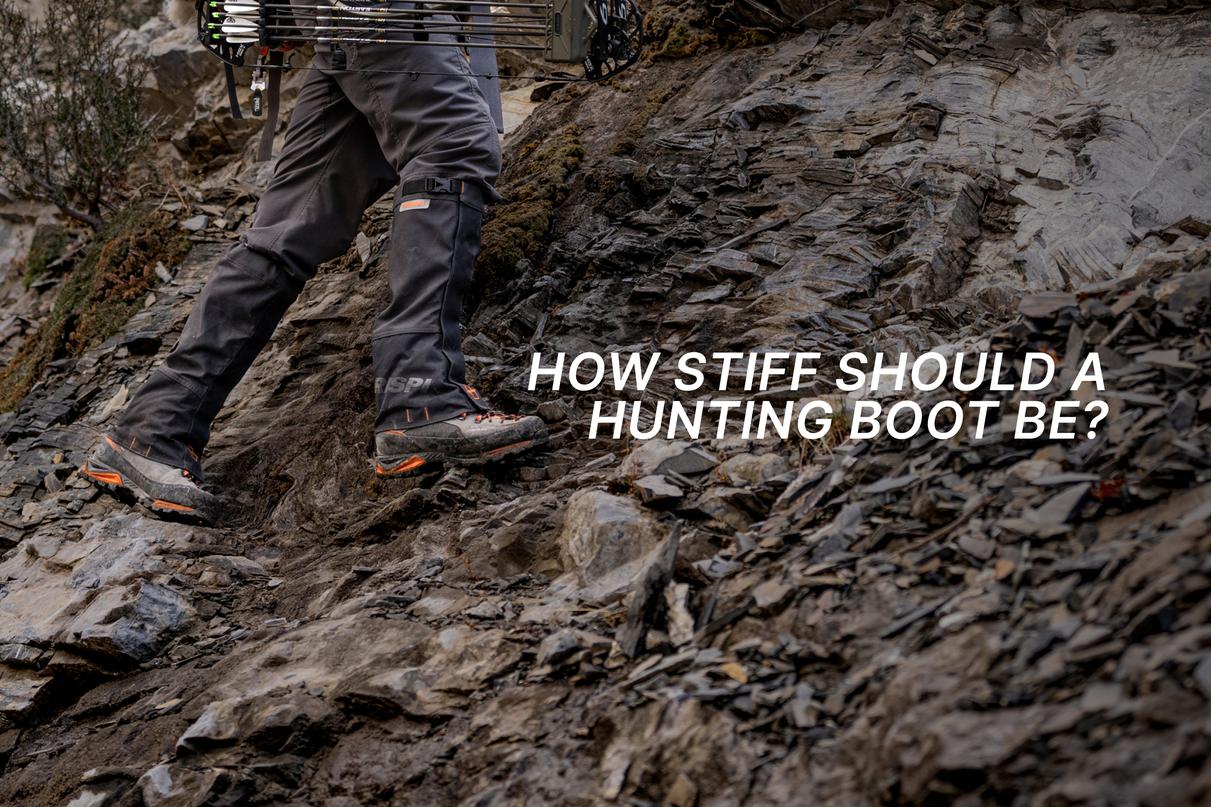
You don't need to understand how a boot is built to choose the right stiffness. You just need to know the terrain you hunt.
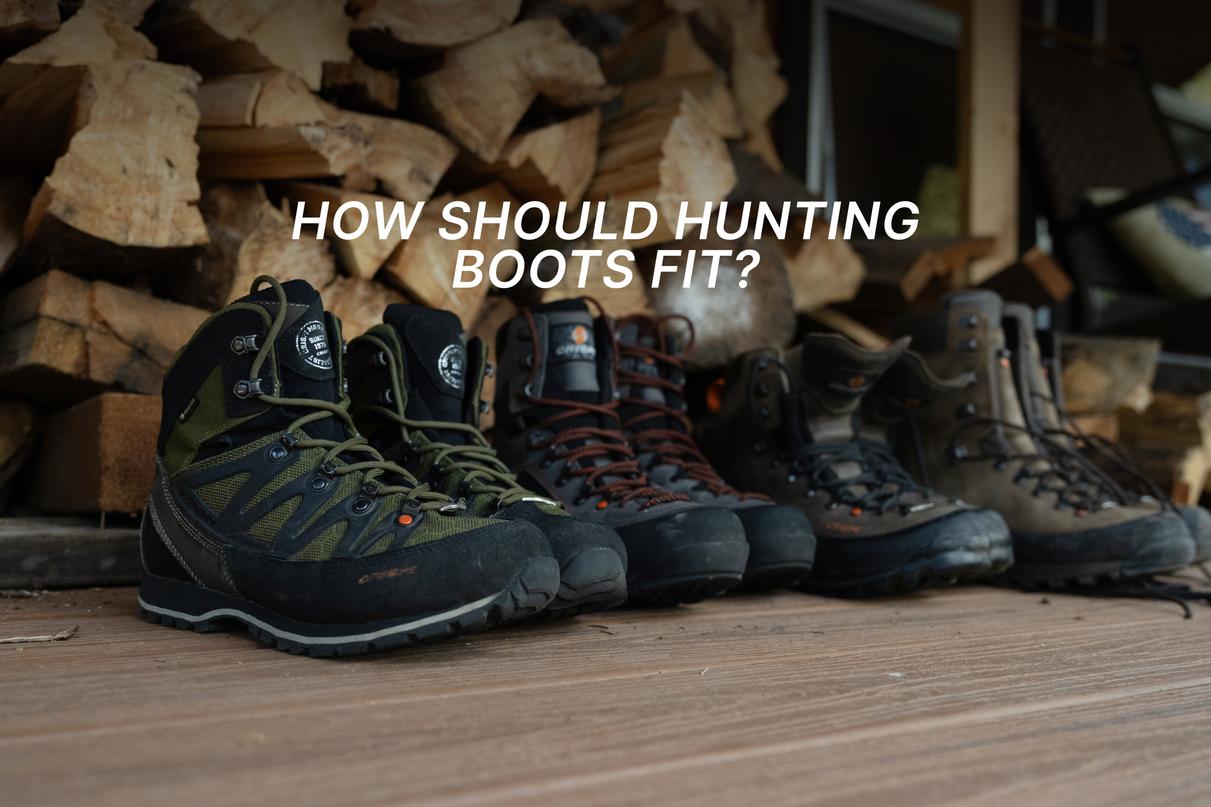
You just spent serious money on a premium pair of mountain hunting boots. You hit the backcountry, and by day two, your heels are shredded, your toes are bruised, and your hunt is compromised. Sound familiar?
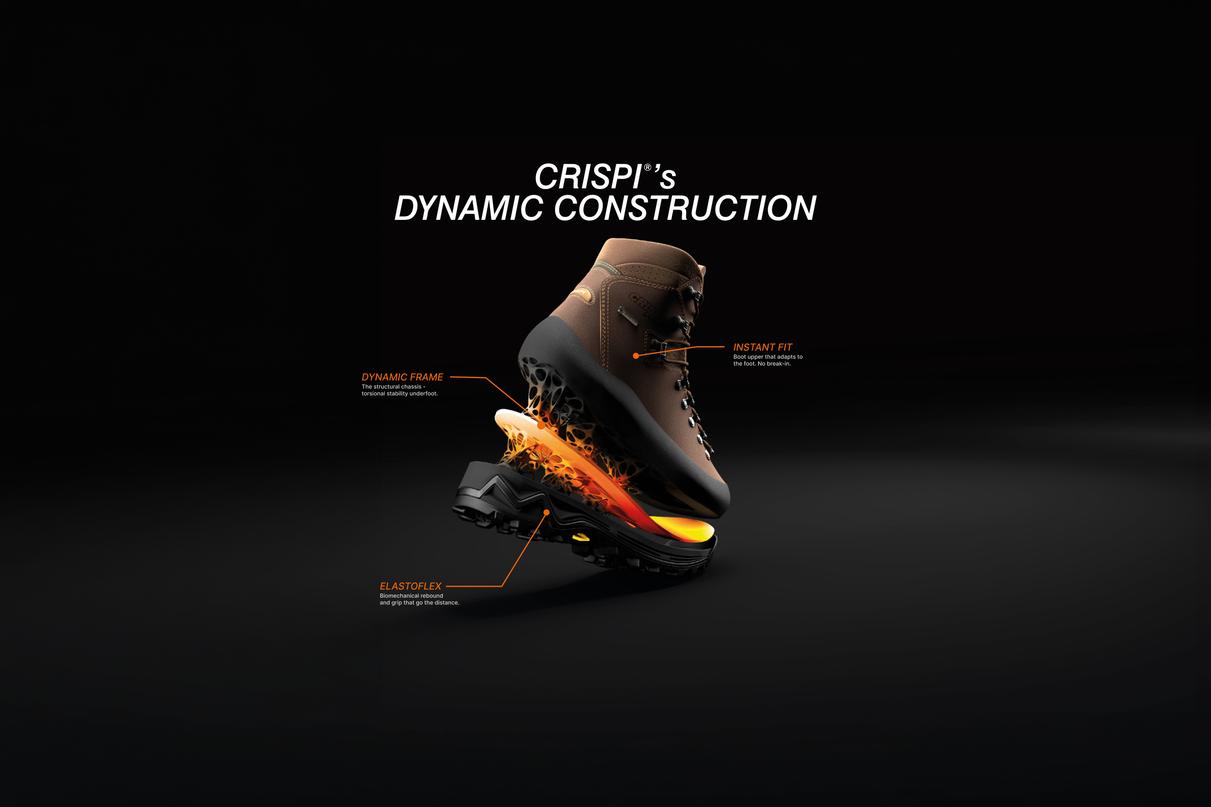
The Dynamic Frame is the foundational "chassis" of every CRISPI® boot. It serves as the essential technical link that bridges the gap between the upper’s comfort and the sole’s performance.