The Three Pillars of Dynamic Construction
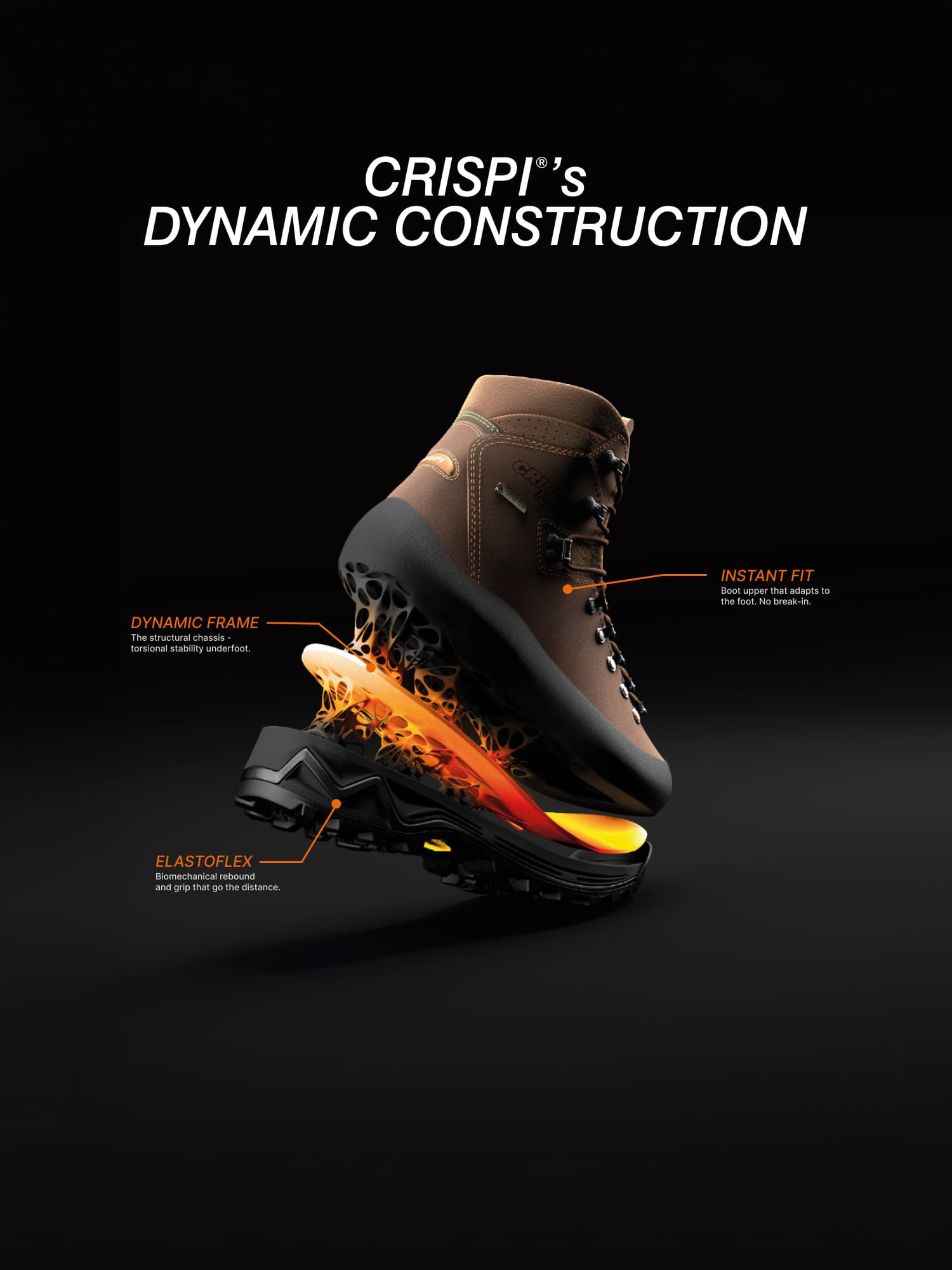
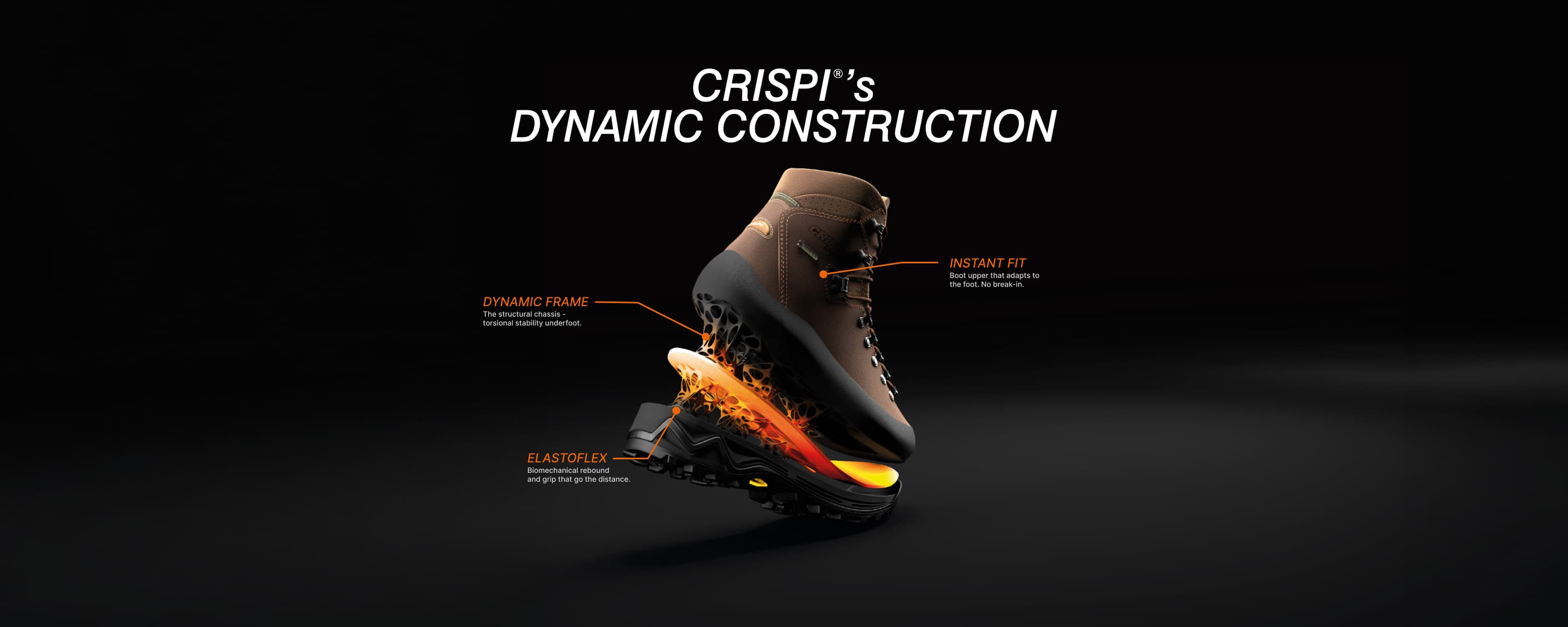
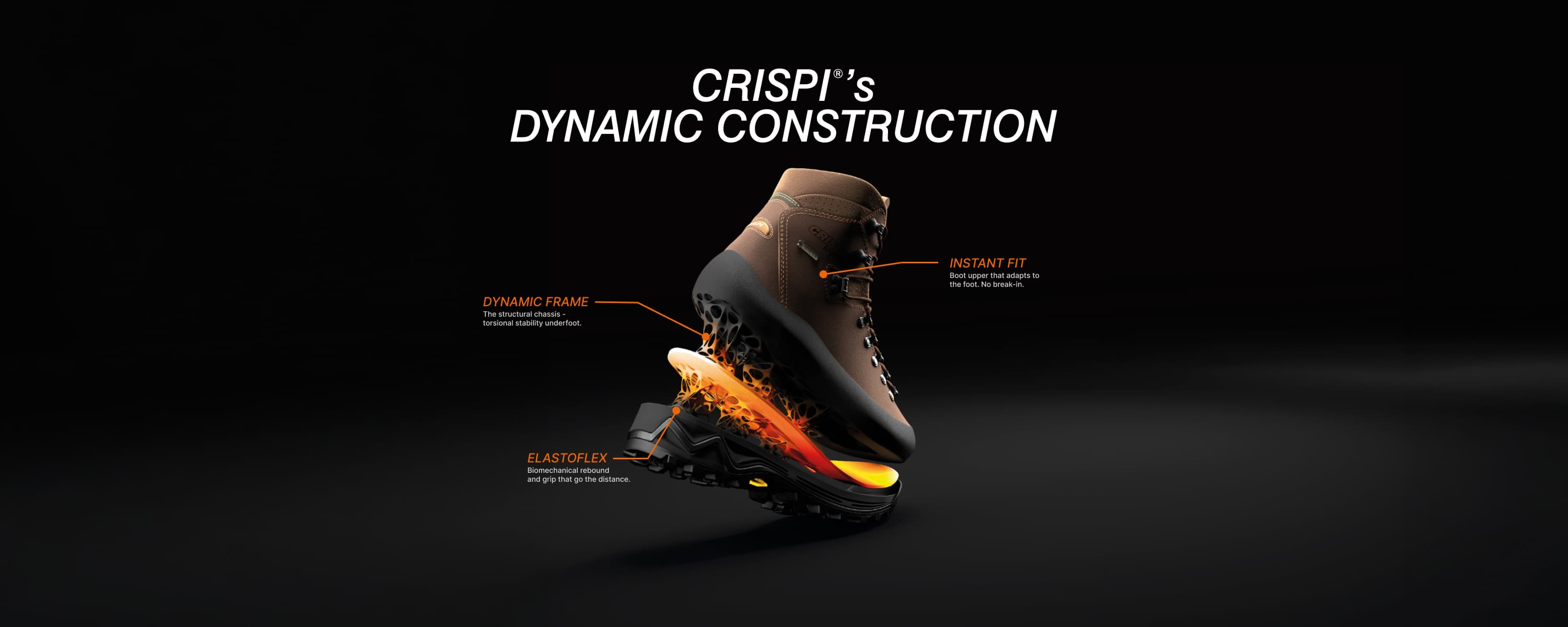
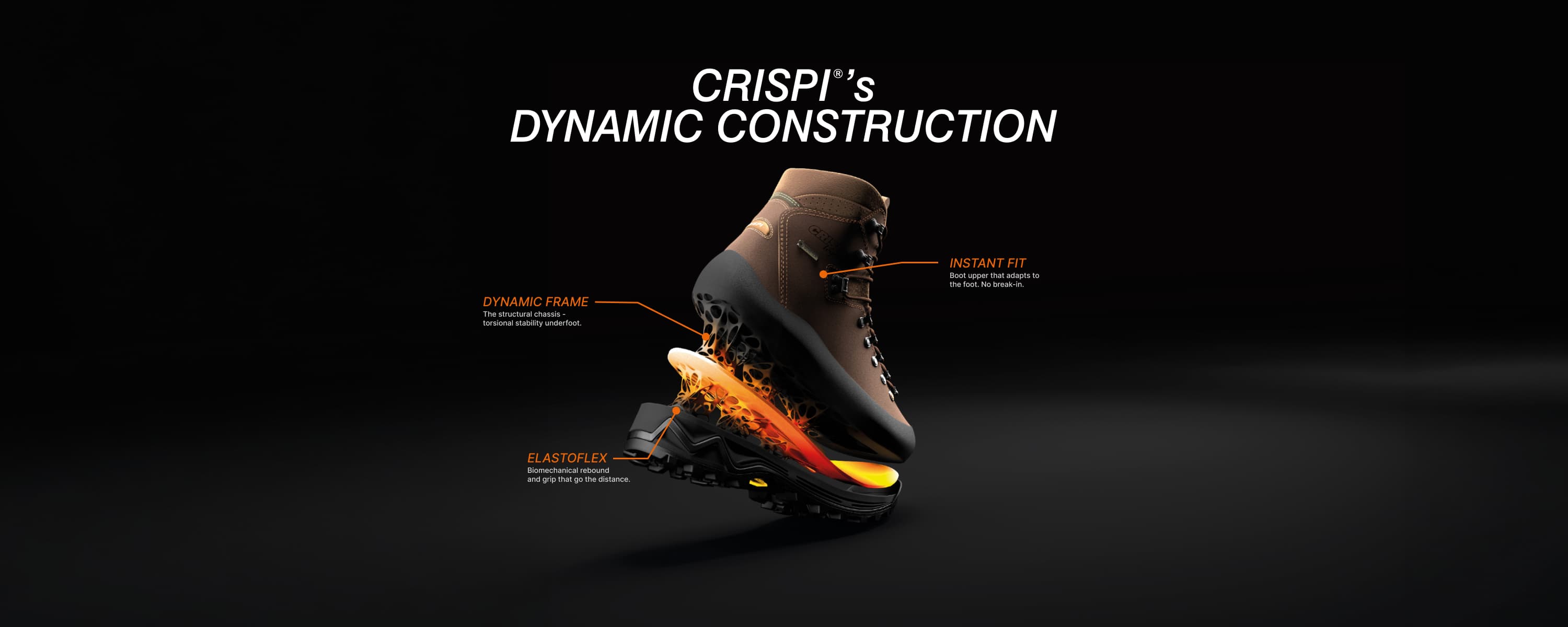
The Three Pillars of Dynamic Construction
I. The Dynamic Frame: The Structural Chassis
The Dynamic Frame is the foundational "chassis" of every CRISPI® boot. It serves as the essential technical link that bridges the gap between the upper’s comfort and the sole’s performance.
- Engineering the Link: Rather than viewing the boot as separate pieces, CRISPI® utilizes the Dynamic Frame to link Instant Fit and Elastoflex technologies together into a single, cohesive unit.
- Chassis Components: Together with the toe box and the heel counter, the Dynamic Frame provides the boot with strong torsional stability while maintaining the precise flexibility required for specific terrain.
- Customized Performance: Every Dynamic Frame is customized based on the intended use; a stiff frame is engineered for climbing steep, small edges to reduce foot fatigue, while a softer frame is utilized for flat terrain to decrease walking effort.
- Stability Advantage: Many boot manufacturers use injection construction where the upper, board, and sole are fused separately, CRISPI®’s lasting construction ensures the upper and Dynamic Frame are wrapped as a unique, unified element. This design provides superior stability and more effective flexibility.
II. Instant Fit: The Standard of Out-of-the-Box Comfort
The Instant Fit pillar focuses on the immediate "out-of-the-box" comfort of the upper and the footbed. This immediate comfort is critical because even a perfect performance sole cannot overcome an uncomfortable upper during rigorous activity.
- Dynamic Comfort: The ultimate goal of this technology is "dynamic comfort," ensuring the boot adapts to the unique anatomy of the wearer's foot.
- Material Selection: CRISPI® prioritizes materials like high-quality leather because it is breathable and possesses the ability to adapt and conform to the foot over time.
- Synthetic Comparison: In contrast to leather, synthetic materials are characterized as being "more stable," meaning they do not adapt to the foot's shape as effectively.
- Waterproof Protection: GORE-TEX® is integrated into this pillar to ensure the boot remains both breathable and waterproof while maintaining its adaptive comfort properties.
III. Elastoflex: Midsole and Outsole Performance
Elastoflex is the performance engine of the boot, providing the necessary technical support and energy return during activity. It is a synergy of three critical components: the Dynamic Frame, the midsole, and the outsole.
- Biomechanical Midsole Design: CRISPI® midsoles feature a radical asymmetrical design that mirrors the biomechanics of walking. The lateral rear is engineered with soft cushioning for initial ground contact, while the medial (inside) part is stiffened to stabilize the ankle throughout the step.
- The Big Toe Pivot: A key technical focus is placed on the area under the big toe, which is essential for balance, control, and stability. The midsole provides a specific rebound in this area, functioning like a spring to return energy to the hunter.
- Specialized Outsoles: CRISPI® develops its own proprietary sole concepts to meet the demanding needs of the "hunting mode," with Vibram® acting as the manufacturer.
- Megagrip Innovation: The newest outsoles utilize a Megagrip rubber compound for industry-leading, high-grip traction. To solve the durability trade-off often found with high-grip rubber, CRISPI® makes the outsole lugs 1 millimeter deeper to significantly enhance the lifespan of the sole.
- The Power of Synergy: Synergy is vital; a great midsole and grippy outsole are useless if paired with the wrong Dynamic Frame, as the boot would lack the torsional resistance required for mountain performance.
The Flex Rating: The Result of the 3 Pillars
The culmination of our Dynamic Frame, Instant Fit, and Elastoflex technologies allows CRISPI® to provide a precise Flex Rating for every boot in our lineup. This rating balances the rigidity of the upper, the density of the Dynamic Frame, and the thickness of the sole.
It is important to note that "Flex" is a synergistic result. For example, a leather boot and a synthetic boot may both be rated a "3 (Moderate)," but the leather boot will feel more supple as it adapts to the foot, whereas the synthetic boot provides a more rigid, stable feel.
CRISPI® Flex Rating Application Chart
| Flex | Feel | Terrain & Performance | Typical Applications |
|---|---|---|---|
| 1 | Super Soft | Maximum flexibility and ground feel | Everyday, ranch, work, lifestyle and light trails |
| 2 | Soft | Flexible, comfortable and mobile with added structure | Scouting, hiking, backpacking, stalking and high-mileage hunting |
| 2.5 | Soft/Moderate | More support for varied terrain without a traditionally stiff feel | Rolling hills, foothills, desert and lower mountain terrain |
| 3 | Moderate | Balanced flexibility, support and torsional stability | Versatile hunting, moderate-to-steep terrain and backpack hunts |
| 4 | Stiff | Increased structure and stability for demanding terrain and loads | Steep, rocky terrain, high-country hunting, heavier packs, sheep and mountain goat |
| 5 | Very Stiff | Maximum structure and stability | Extreme alpine, highly technical terrain, mountaineering and specialized mountain hunting |
Other Articles
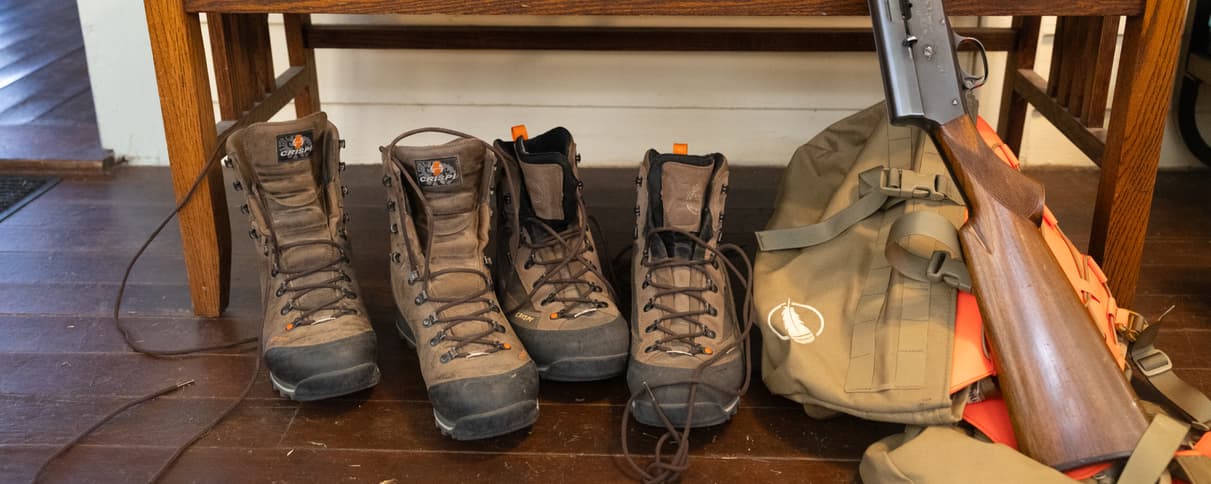
How to Choose the Right Hunting Boot
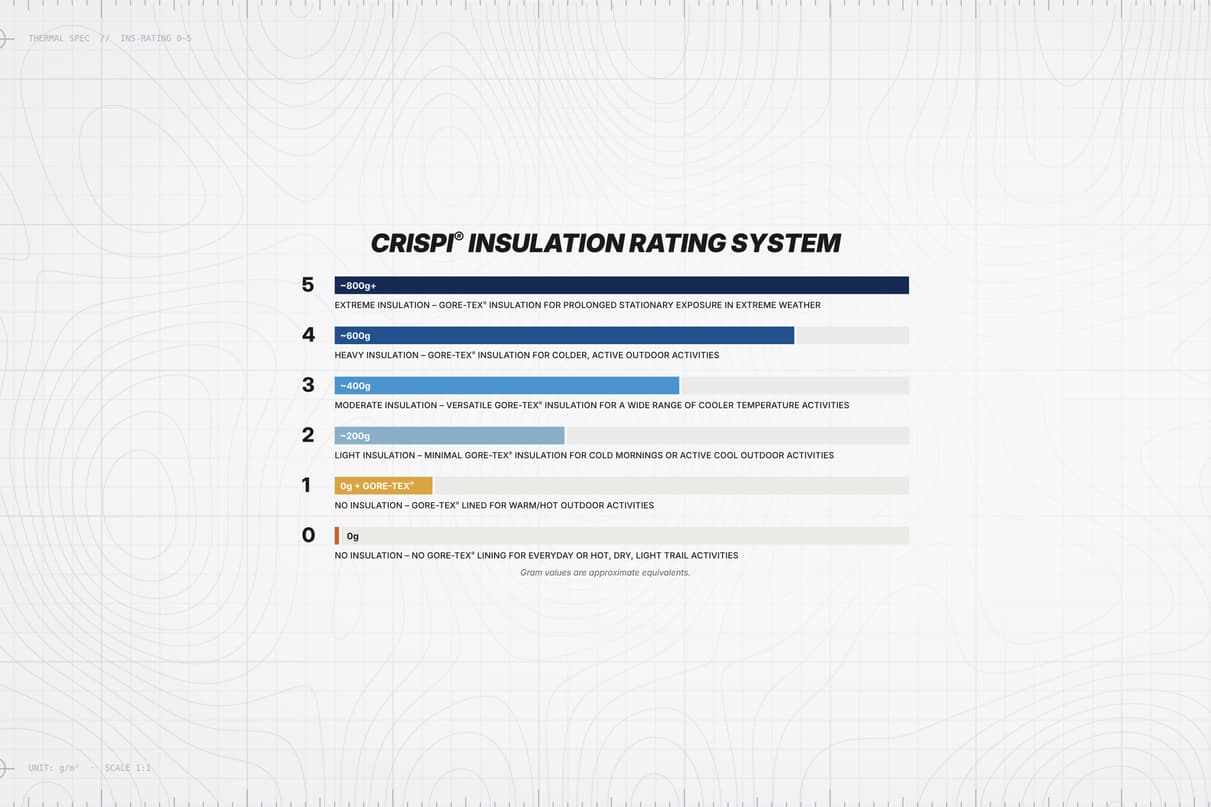
How to Read the CRISPI Insulation Rating System
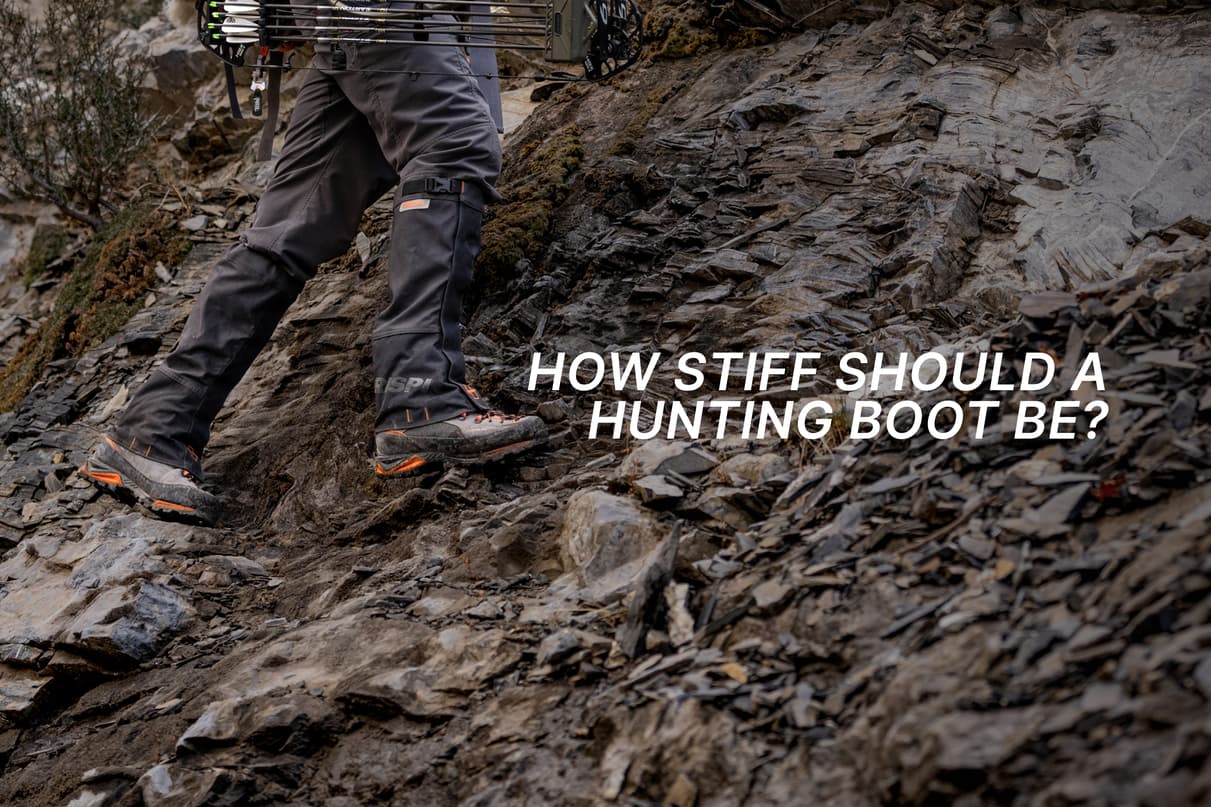
How Stiff Should Hunting Boots Be
You don't need to understand how a boot is built to choose the right stiffness. You just need to know the terrain you hunt.