How to Choose the Right Hunting Boot
How to Choose the Right Hunting Boot: A Framework for Every Region, Season, and Terrain in America
Ask ten hunters how they picked their boots, and most will give you some version of the same answer: a buddy swore by a brand, a pair looked tough on the shelf, or last year’s boots finally blew out and they grabbed whatever fit. Almost nobody actually thinks it through, because nobody’s ever handed them a way to think it through.
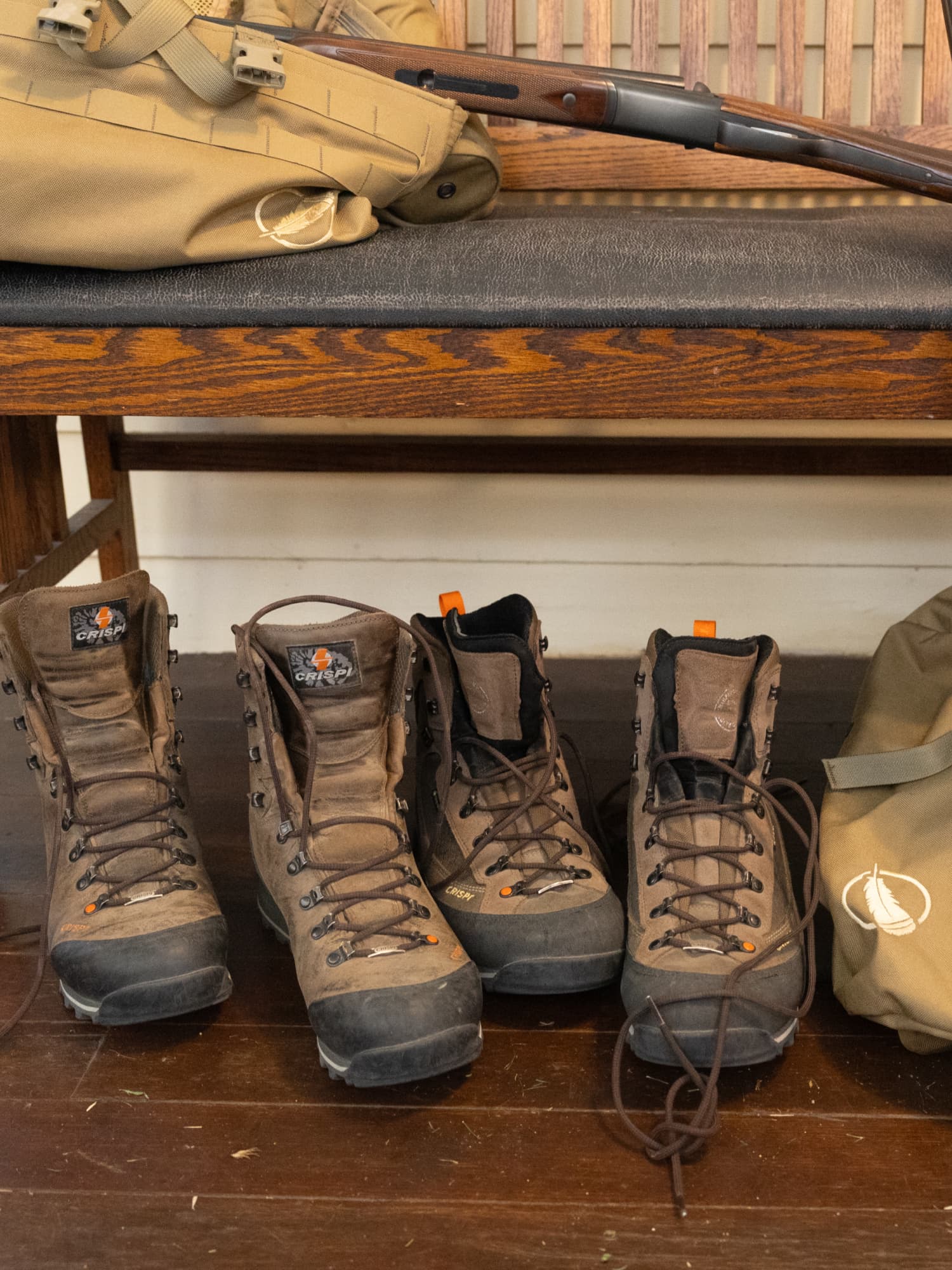
That’s a real problem. Footwear might be the single piece of gear most likely to end a hunt early. Not your rifle. Not your optics. Your boots. Cold feet cut a treestand sit short. A rolled ankle on loose scree ends a backcountry elk hunt on day one. A boot that doesn’t breathe turns a warm September sit into a sweaty, scent-soaked mess. The right boot doesn’t just make you more comfortable. It buys you more hours in the field, and hours in the field are what put game on the ground.
At CRISPI®, we’ve spent decades handcrafting hunting boots in Italy and proving them across North America, and we’ve learned that the right boot starts with the right questions. So before we get into specific boots for specific hunts (and we’ve got a lot of those coming), we want to lay out how we think about it. Every recommendation in this series, from Louisiana swamp to Colorado scree to Alaskan tundra, comes back to four questions.
Quick Answer
Choose a hunting boot by answering four questions: where you hunt, when you hunt, what the weather’s doing, and what terrain you’ll cover on foot. Together, those answers set the specs that matter: insulation level, waterproof lining, height, flex, outsole, and upper material. CRISPI® rates its boots on two numbered scales, the CRISPI® Flex Rating System (1–5) and the CRISPI® Insulation Rating System (0–5), so you can match a boot to your hunt by the numbers instead of guessing.
Jump to:
The Four Questions That Actually Matter
Where are you hunting? The region and its baseline landscape.
When are you hunting? The season and where it falls on the calendar.
What’s the weather doing? Temperature swings, rain vs. snow, humidity, wind.
What’s under your boots? The actual terrain you’ll be covering on foot.
Answer any one of these alone, and you’ll get a mediocre answer. “I need a cold weather boot” means something completely different for someone sitting dead-still in a Minnesota treestand at 10°F than it does for an elk hunter side-hilling snow-covered scree in Colorado at that same temperature. Same weather. Totally different terrain and activity level. Totally different boot. That’s why this whole series is built around combinations, not single factors.
Let’s break each one down.
1. Where You Hunt
The landscape you hunt is the first filter, before you even get to the time of year. Over this series, we’ll work through nine hunting regions, each with its own signature game and its own demands on your feet:
Northeast & Great Lakes: hardwood ridges, lake-effect snow, whitetail and grouse country.
Mid-Atlantic & Appalachian Highlands: steep, rocky ridgelines, laurel thickets, whitetail and turkey.
Southeast & Deep South: pine flatwoods, river bottoms, heat, humidity, and snake country.
Midwest & Corn Belt: row-crop fields and timber draws, home to some of the best rut hunting anywhere, bookended by brutal cold snaps.
Great Plains: wide-open grassland, relentless wind, wild temperature swings.
Rocky Mountain West: high alpine scree and dark timber, where elevation changes everything.
Desert Southwest: rock, cactus, canyon country, and some of the biggest single-day temperature swings you’ll ever hunt in.
Pacific Northwest & Northern California: dense, wet rainforest where waterproofing beats almost everything else.
Alaska & the Far North: tundra and muskeg extreme enough that even great boots have limits.
A boot built for Appalachian rock is overkill on a flat Midwest field edge. A boot built for a cornfield won’t survive a season of Rocky Mountain scree. Region comes first.
2. When You Hunt
Season does two jobs at once: it sets the weather, and it sets how much ground you’re covering. Across most of the country, the hunting calendar breaks into four windows we’ll use throughout this series.
Spring brings turkey and bear season across most of the country, plus sheep and javelina draws out West. It’s mild-to-cool, often wet, and defined by quiet, deliberate movement.
Early Season covers archery openers, velvet bucks, early bear, dove, and the start of elk and mule deer season out West. It’s usually the warmest hunting of the year, which flips your priority from warmth to breathability.
Rut & Rifle (Mid-Season) is the marquee window for most whitetail hunters, and rifle season for elk and mule deer. Temperatures start dropping, first snow shows up in a lot of the country, and all-day sits become the norm.
Late Season is the hardest window. Treestand and blind hunters are sitting motionless for hours in genuinely dangerous cold, while mountain hunters are dealing with deep snow and short days.
Same region, four different windows, four different boots. A Midwest whitetail hunter in September wants something close to a trail shoe. That same hunter in late December needs something closer to a wearable furnace.
3. What the Weather's Doing
This is where most of us oversimplify. “Cold boots” and “warm boots” is a start, but it skips three things that matter just as much as the thermometer.
The first is how much the temperature swings in a day. A desert hunter might see 100°F at noon and 40°F before daylight in the same sit. A boot built for only one end of that range fails you at the other.
The second is what kind of precipitation you’re dealing with. Dry cold and wet cold aren’t the same animal. A Pacific Northwest hunter standing in 45°F steady rain needs less raw insulation than a Midwest hunter in 25°F dry air. That same hunter needs a lot more attention paid to waterproofing, though, because wet insulation stops insulating.
The third is how much you’re actually moving. Experienced hunters know this one in their gut, and new hunters usually miss it. Sitting still in a treestand generates almost no body heat, so you need far more insulation than you would hiking or spot-and-stalking at the same temperature.
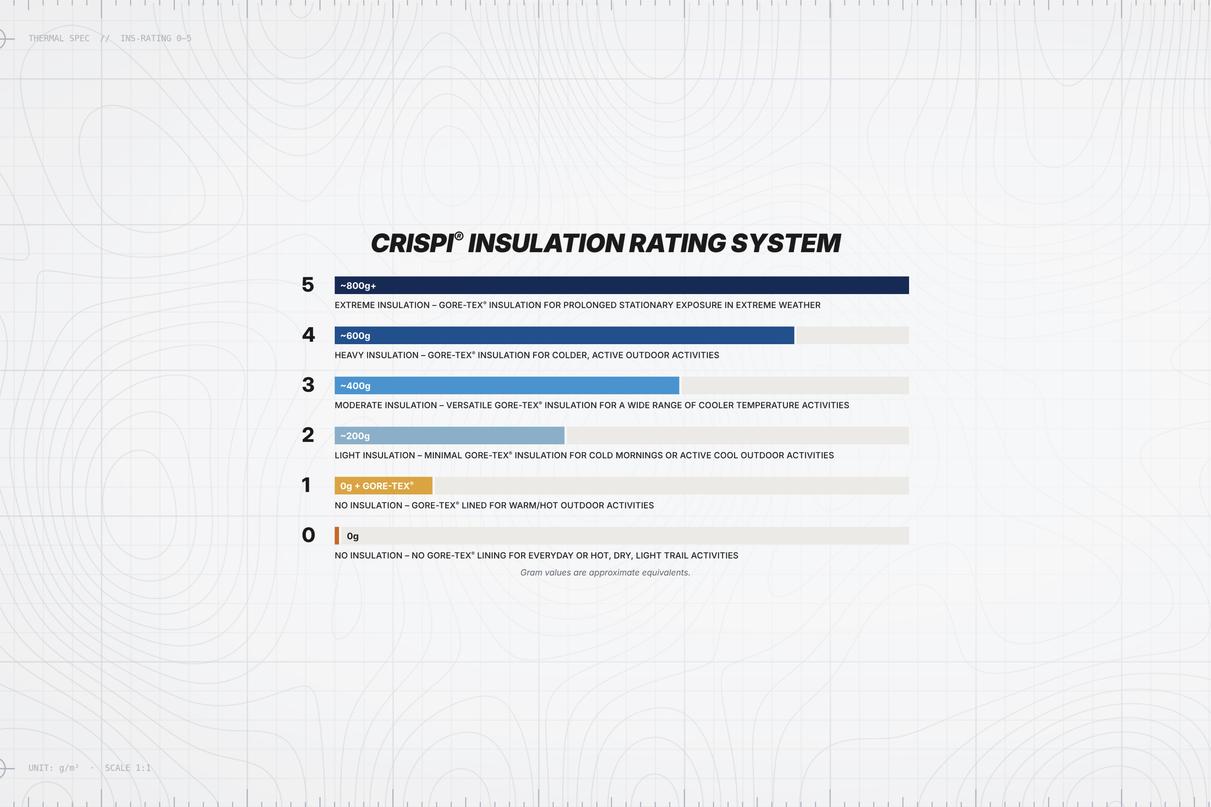
That’s exactly why we built the CRISPI® Insulation Rating System. Hunters already shop insulation by grams, where a higher number means a warmer boot. So we rate every insulated boot on a simple 0–5 scale with approximate gram equivalents. The rating reflects the whole boot, its insulation and its upper materials together, not just a number on a tag.
Want the full breakdown of each level? Read How to Read the CRISPI® Insulation Rating.
| Level | Insulation | Best For |
|---|---|---|
| 0 | No insulation, no GORE-TEX® lining | Everyday wear; hot, dry conditions; light trail |
| 1 | No insulation (0g), GORE-TEX® lined | Warm to hot outdoor activities |
| 2 | Light (~200g) | Cold mornings, active hunts in cool weather |
| 3 | Moderate (~400g) | Versatile warmth across a wide range of cooler temps |
| 4 | Heavy (~600g) | Colder weather with steady activity |
| 5 | Extreme (~800g+) | Prolonged stationary exposure in extreme cold, like a December treestand or duck blind |
Gram values are approximate equivalents.
Here’s the part most hunters never hear: warm feet are dry feet. Your feet sweat even in the cold, and a damp foot is a cold foot no matter how much insulation surrounds it. In many insulated boots, the waterproof bootie is bonded solid to the upper, which seals it and traps that moisture inside. At CRISPI®, we spot-glue the GORE-TEX® bootie to the upper only at strategic points, so it can breathe the way it was designed to. Perspiration escapes, your feet stay drier, and dry feet stay warmer through a long sit.
Humidity earns its own mention too. In the Southeast and along the Gulf, breathability is the priority even when it’s not that hot outside, because a boot that traps moisture leaves you with wet, blistered feet no matter what the thermometer says.
4. What's Under Your Boots
Terrain decides structure (height, stiffness, sole, and upper material), mostly independent of temperature. Here are a few of the terrain categories you’ll see running through this series.
Hardwood ridges and mixed forest (Northeast, Appalachians) mean wet leaves, loose rock, and the occasional icy slope. Ankle support and traction matter.
Ag fields and timber draws (Midwest, parts of the Plains) are easier underfoot. They still demand serious mud-shedding traction, and often a long, exposed walk to the stand.
High alpine scree and talus (Rockies, Alaska) is the toughest terrain on this list: loose rock, steep side-hilling, and heavy pack loads. You want a stiffer boot with real torsional stability and an aggressive, self-cleaning outsole built for braking on the way down.
Desert rock, caliche, and thorn scrub (Southwest) is less about rolling an ankle and more about getting shredded. Cactus spines and volcanic rock chew through a soft upper fast.
Marsh, swamp, and flooded timber (Southeast, Gulf Coast waterfowl) is a different animal entirely. It usually calls for a tall rubber or neoprene boot rather than a traditional leather hunting boot.
Wet coastal rainforest (Pacific Northwest) is slick, moss-covered, and never dry. Sole compound and waterproofing matter more than anything else here.
Tundra, muskeg, and glacial terrain (Alaska) have footing that goes from firm to bottomless in a couple of steps, on top of some of the heaviest pack-out loads in North American hunting.
Putting It All Together
Once you know your region, your season, your likely weather, and your terrain, the actual boot spec falls out pretty naturally. Here’s the vocabulary we’ll keep coming back to across this series.
Insulation runs from Level 0 or 1 on the CRISPI® Insulation Rating System for high-output, warm-weather hunts, up through Level 5 for a stationary sit in serious cold.
The waterproof lining follows the insulation. Our non-insulated boots use a GORE-TEX® Waterproof Performance Lining, tuned for breathability on warm, active hunts. Our insulated boots use a GORE-TEX® Insulated Comfort Lining, built to hold heat while still letting perspiration escape.
Height runs roughly 6–8" for mobile, high-mileage hunts; 9–10" for general mountain and mixed terrain; and 10–12"+ once deep snow, mud, or heavy loads call for more coverage and ankle support.
Flex is where CRISPI® has led the way. We introduced our numbered flex rating back in 2017, and today every boot carries a rating on the CRISPI® Flex Rating System, from 1 (Super Soft) to 5 (Stiff). A softer boot, like a 2 Flex (Soft), moves naturally for walking miles and stalking quietly. A stiffer boot, like a 4 (Moderate/Stiff) or a 5 (Stiff), trades some agility for the support you want on steep, technical ground or under a heavy pack. That rating comes from the whole build working together, including the upper, the sole, and CRISPI® Dynamic Frame, the structural chassis at the heart of every boot we make.
See how every CRISPI® boot is rated in the CRISPI® Flex Rating System.
Learn what Dynamic Frame does and how it fits into the Three Pillars of Dynamic Construction.
Outsoles split between lightweight, self-cleaning traction for mixed, fast-moving terrain and an aggressive, braking-focused lug for steep descents on loose rock.
Upper material ranges from synthetic and lightweight leather blends, for breathability and low weight, to full-grain leather where you need real abrasion resistance and long-term durability.
Every CRISPI® boot is our answer to one specific combination of these variables. That’s exactly why “what’s the best hunting boot?” isn’t really the right question. The right question is: what’s the best boot for this hunt, in this place, at this time of year, in these conditions?
Frequently Asked Questions
How much insulation do I need in a hunting boot?
It depends more on how much you’re moving than on the temperature alone. For warm, active hunts, a non-insulated boot (Level 0 or 1 on the CRISPI® Insulation Rating System) is usually right. Cold mornings with steady movement call for Level 2 or 3. Long, motionless sits in serious cold, like a late-season treestand or a duck blind, call for Level 4 or 5.
Should my hunting boots be soft or stiff?
Match flex to terrain and load. Softer boots, rated 1 to 2 on the CRISPI® Flex Rating System, suit flatter ground, long walks, and quiet stalking. Stiffer boots, rated 4 to 5, suit steep, rocky mountain terrain and heavy packs. A 3 (Moderate) covers a wide range of mixed terrain.
How tall should a hunting boot be?
Plan on roughly 6–8" for fast, high-mileage hunts; 9–10" for general mountain and mixed terrain; and 10–12" or taller for deep snow, mud, or heavy pack-out loads.
Is there one hunting boot that works for everything?
Not really. A boot built for a 100-degree desert stalk and one built for a sub-zero treestand sit are solving opposite problems. But if you can only own one hunting boot, start with the Nevada. It’s been a cornerstone of the CRISPI® lineup for more than 40 years, and for good reason. At 8 inches with a 3 Flex rating (Moderate), it has the support for steep mountain ground and loaded pack-outs, and the comfort for long days on mixed terrain, from spring turkey to fall elk. If most of your hunting is early season or on the move, go with the Nevada Non-Insulated. If you hunt more cool-weather days, the insulated Nevada Legend adds Level 2 (~200g) warmth.
What's Coming Next
Starting from this framework, we’re going region by region and season by season, matching real weather and real terrain to real boot specs and pointing you toward the boots built to handle each one. Maybe you’re chasing a gobbler through soaked Appalachian hardwoods in April. Maybe you’re glassing for Coues deer on 100-degree desert rock in October, or sitting a Midwest treestand through a sub-zero December cold snap. Either way, there’s a real answer to “what should be on my feet,” and that’s what the rest of this series is going to give you.
Your boots should be the last thing you’re thinking about on a hunt. Get the match right, and they will be.
One Step Closer.
Other Articles
How to Read the CRISPI Insulation Rating System
How Stiff Should Hunting Boots Be
You don't need to understand how a boot is built to choose the right stiffness. You just need to know the terrain you hunt.
How Should My Hunting Boots Fit
You just spent serious money on a premium pair of mountain hunting boots. You hit the backcountry, and by day two, your heels are shredded, your toes are bruised, and your hunt is compromised. Sound familiar?