COMPARE
Add product to compare
COMPARE
Add product to compare
Enable Cookies
Our website uses cookies, pixels, and similar technology (“Cookies”) to improve your online experience. By clicking “Accept All,” you consent to our use of all Cookies to personalize your experience, serve targeted advertisements, perform analytics, and for other business purposes. You may block some Cookies by clicking “Reject,” or change your cookie settings by clicking “Preferences.”
By using our website, you acknowledge this notice, and by clicking “Accept All,” “Reject,” or “Preferences,” you agree to our Website Terms of Use. See our Cookie Notice and Privacy Policy to learn more.


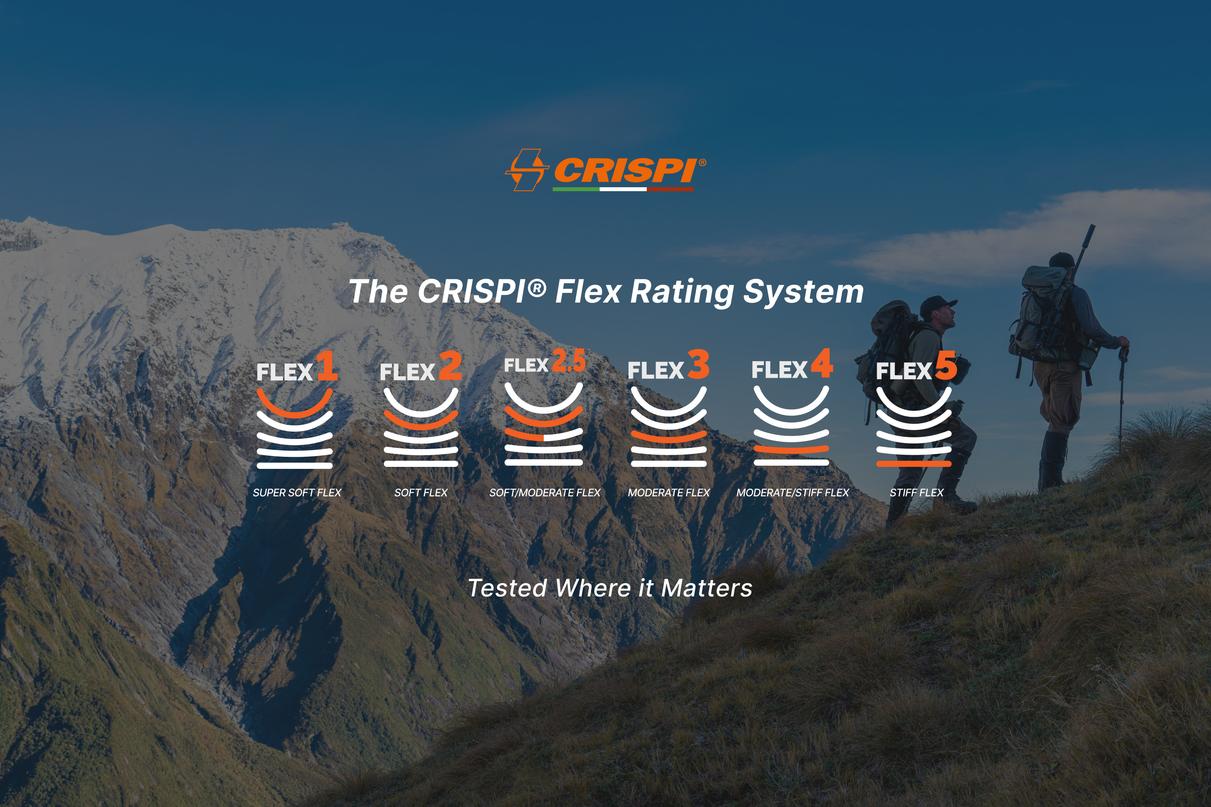
You don't need to understand how a boot is built to choose the right stiffness. You just need to know the terrain you hunt. That's the whole idea behind boot stiffness, and it's why we created the CRISPI® Flex Rating System back in 2017, years before other boot stiffness scales appeared in the hunting world.
Hunters kept asking us the same thing: what does this boot actually feel like on the mountain? There was no shared language for it. So we built one. Below, we answer the questions hunters ask most about boot stiffness, in plain terms, from the people who started the conversation.
Quick Answer
Your hunting boot should be as stiff as your terrain demands, and no stiffer. Flat ground and early-season miles favor a softer-flex boot that moves with your foot. Steep side-hills, shale and heavy pack-outs call for a stiffer boot that holds its shape so your feet and legs don't have to. For most hunters covering mixed country, a 3 Flex(Moderate on the CRISPI® Flex Rating scale) is the most versatile place to start.
Jump to:
Boot stiffness, or flex, is how much a boot bends and twists under your weight. A soft boot bends easily at the ball of your foot, like a trail shoe. A stiff boot resists bending and holds a flat, stable platform, even when you're standing on a rock edge or kicking steps into a slope.
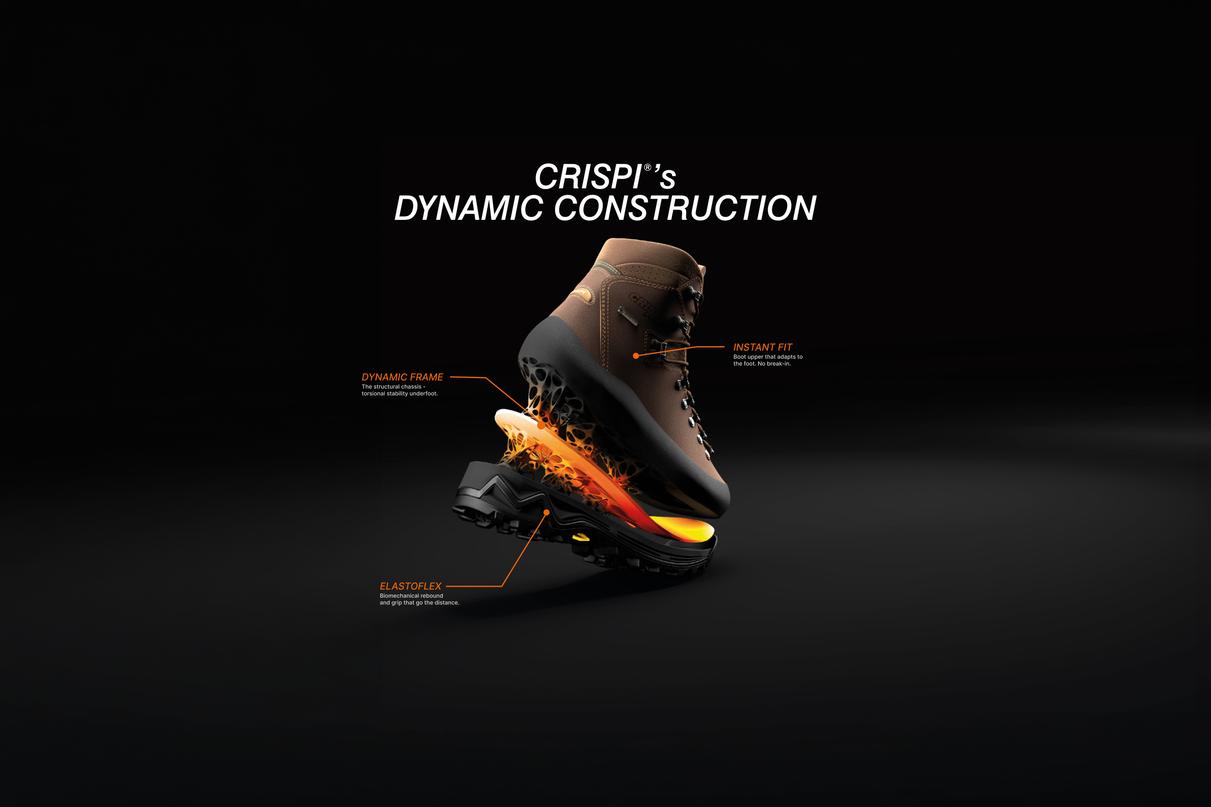
Here's what most people miss: stiffness isn't one part of the boot. It comes from the upper, the frame underneath your foot, and the sole all working together. At CRISPI®, we engineer all three as one system through Dynamic Construction, so each boot's flex is tuned as a whole.
That's also why two boots with the same rating can feel a little different on your foot. A leather boot will feel more supple than a synthetic boot at the same flex rating, because the materials move differently even when the overall stiffness is matched.
For the full breakdown of how Dynamic Construction works, see The Three Pillars of Dynamic Construction:
Start with your terrain. The steeper, rockier, and more off-camber the ground, the more stiffness helps. The flatter the ground and the more miles you cover at speed, the more a softer-flex boot pays off.
The CRISPI® Flex Rating System runs from 1 to 5, with a 2.5 step in the middle, so you can match a boot to your country before you ever lace it up.
| Flex Rating | What It Feels Like | Where It Shines |
|---|---|---|

![]() 1 – Super Soft |
Bends freely, like a work or everyday boot | Daily wear, work, light trail use |
<![]() 2 – Soft |

Light, nimble, moves with your foot | Flat terrain, early season, scouting, high-activity stalking |

![]() 2.5 – Soft/Moderate |
Flexible with added support under load | Rolling hills, lower mountain terrain, long miles with a pack |
![]() 3 – Moderate |
Balanced flex and support | All terrain types; side-hilling, heavy pack-outs, and flat ground too |
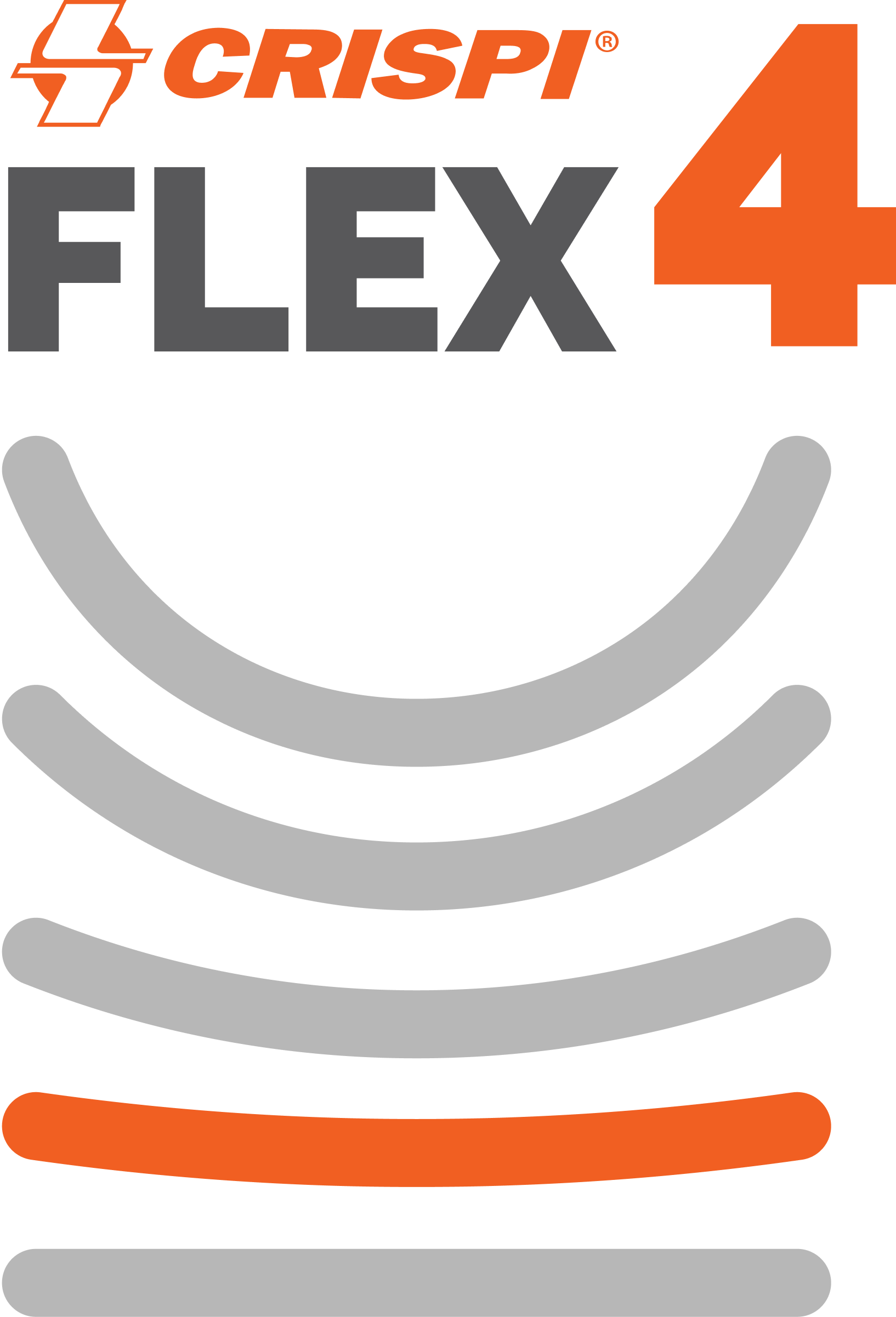
![]() 4 – Moderate/Stiff |
Firm, stable platform | Technical alpine terrain, shale slides, aggressive side-hilling |
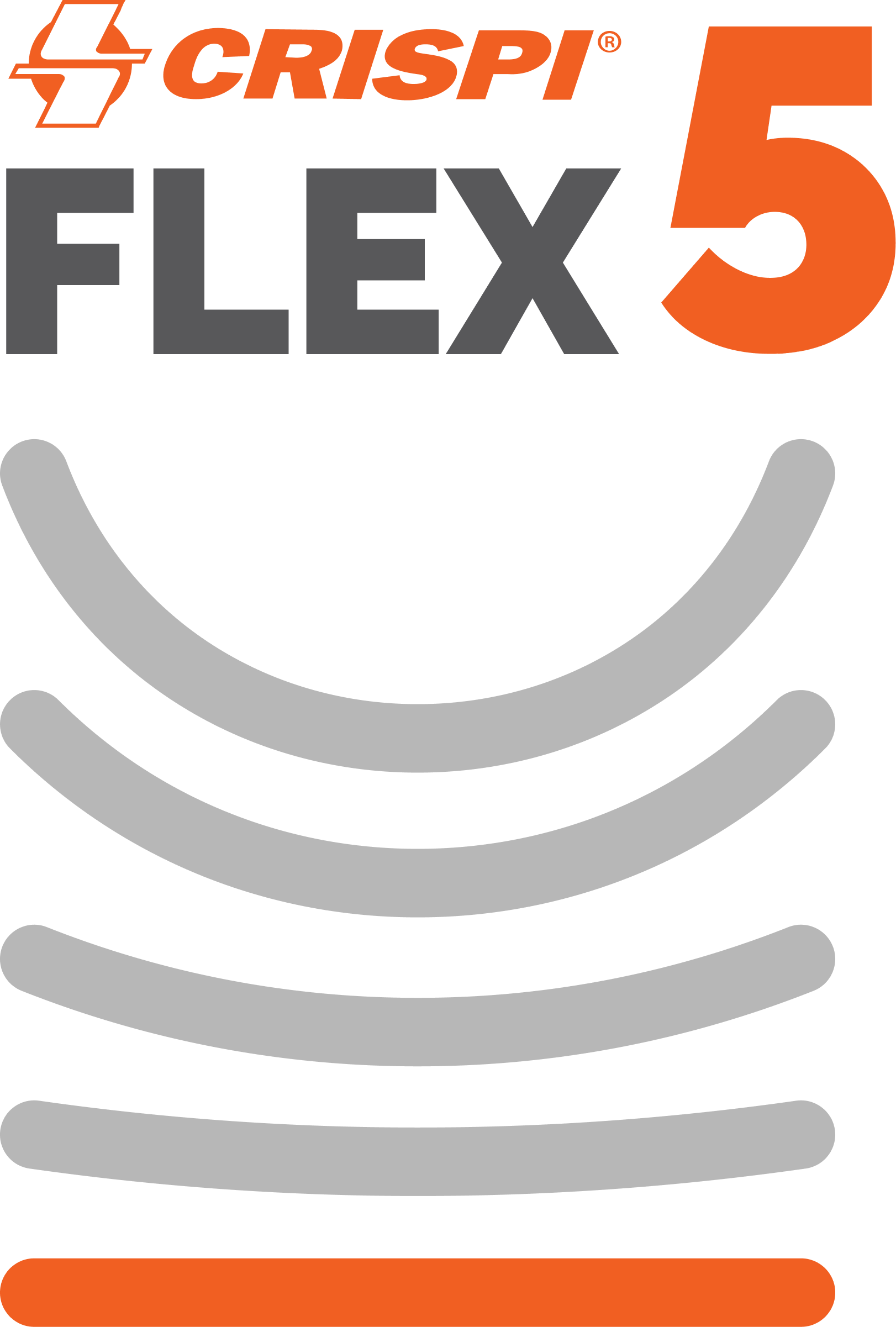
![]() 5 – Stiff |
Maximum rigidity | Extreme high-altitude and technical mountain use |
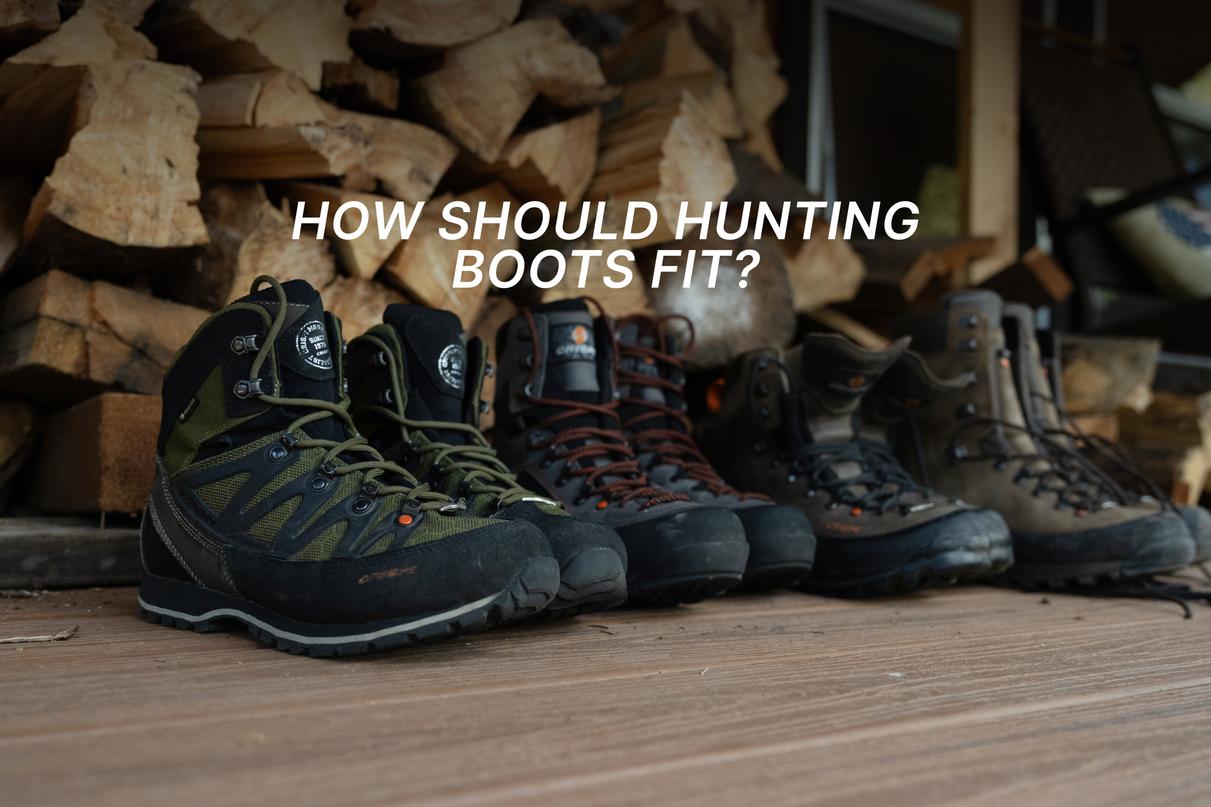
Table links go to men's boots. To see women's boots by Flex Rating, click here.
If you're not sure, a 3 flex (Moderate) is the most versatile rating we make. It handles side-hills and heavy loads while staying comfortable on flatter ground.
To see which CRISPI® boots fall into each rating, see the CRISPI® Flex Rating Guide:
Neither is better. They're built for different jobs. A flexible boot lets your foot do the work; a stiff boot does more of the work for you.
| Softer-Flex Boots | Stiffer-Flex Boots | |
|---|---|---|
| Feel | Light, natural, close to the ground | Solid, planted, supportive |
| Best terrain | Flat to rolling ground, trails, fields, timber | Steep, rocky, off-camber, technical ground |
| Best for | Early season, long miles, quiet stalking | Side-hilling, heavy pack-outs, alpine hunts |
| On rough ground | Your foot wraps around rocks and roots | The boot holds its shape and edges into the slope |
| On flat ground | Rolls naturally with each step | Can feel clunky over long, easy miles |
For steep, rocky country, usually yes. When you're side-hilling across a slope, a soft boot folds and lets your foot roll toward the downhill side. A stiffer boot holds a flat platform, so you can dig the edge of the boot into the hill and trust it.
That's why mountain hunters reach for stiffer boots. On shale, scree, and broken rock, a stiff sole spreads the load across the whole boot instead of concentrating it under one spot on your foot. Kicking steps into a slope, standing on a small ledge, or carrying a heavy pack-out downhill all get easier when the boot isn't bending under you.
But "mountain" doesn't automatically mean the stiffest boot you can find. Plenty of western hunters spend their seasons in a boot from the middle of the scale, because their country mixes steep climbs with long stretches of rolling ground. Save the 4 (Moderate/Stiff) and 5 (Stiff) for terrain that's truly technical or high-alpine.
Yes. A boot that's stiffer than your terrain needs works against you. On flat or rolling ground, a stiff boot can't roll through your stride naturally, so every step feels heavier and more mechanical than it should.
The fix isn't to tough it out. It's to match the flex to where you actually spend most of your time. If 80% of your hunting is in timber and fields, buy for the timber and fields, not for the one steep ridge you might climb.
Traditionally, yes. Stiff boots have a reputation for long, painful break-ins because the materials have to soften and shape to your foot over many miles.
We don't think you should have to choose between support and comfort. CRISPI® boots are built with Dynamic Construction, so the boot is shaped to work with your foot from the first day, even in our stiffer ratings. The break-in is built in.
It's still smart to wear any new boot on a few local hikes with your hunting socks and pack before opening day. That gives your feet time to get used to the boot, and lets you confirm the fit while there's still time to adjust.
For what to check, see How Should Hunting Boots Fit?:
The right stiffness saves energy; the wrong stiffness costs it. On steep or rocky ground, a stiffer boot carries part of the load your feet and lower legs would otherwise handle, holding your foot steady so you aren't constantly correcting on every uneven step. Over a long day with a heavy pack, that adds up.
On flat ground, it flips. A boot that's too stiff fights your natural stride, and a boot that's too soft on rough ground makes your feet work harder to stabilize you. Either way, the mismatch is what wears you down. That's the whole point of matching flex to the terrain you will spend the most time in while on your hunt.
Stiffness and ankle support are related, but they're not the same thing. Stiffness is mostly about the platform under your foot: how well the boot resists bending and twisting. Ankle support comes from how the boot holds your heel and ankle in place, which depends on the upper, the cuff height, and the fit.
A stiffer platform does help your ankle on uneven ground, because the boot doesn't roll with every rock. A secure upper keeps your foot from shifting inside the boot. The best boots get both right.
On select models, CRISPI® adds the Ankle Bone Support System (A.B.S.S.), part of our Instant Fit pillar, which shapes the boot around the ankle bone for a secure, comfortable hold. You'll find it on boots like the Nevada, Briksdal MTN, and Lapponia Pro.
Ask yourself three questions:
Where do you hunt most? Flat fields, gentle rolling hills, and timber point to a softer flex. Steep, rocky, or alpine country points to a stiffer flex.
How much weight will you carry? Long backcountry trips and heavy pack-outs favor more support.
Is this your only boot? If one pair has to do it all, a 3 Flex (Moderate) covers the widest range of ground.
Flex is also personal. Some hunters want a stiffer boot everywhere for the planted feel; others want as much flexibility as they can get, even in the mountains. Use the rating as your starting point, then get into a pair at a CRISPI® dealer and feel the difference for yourself.
Yes. On the CRISPI® scale, 1 is the softest (Super Soft) and 5 is the stiffest (Stiff).
A 2.5 is Soft/Moderate on the CRISPI® scale. It keeps the flexible feel of a softer boot but adds support under load, making it a strong choice for rolling hills, lower mountain terrain, and long miles with a pack.
It changes how the flex feels. A leather boot will feel more supple than a synthetic boot at the same flex rating, because the materials move differently even when the overall stiffness is matched.
No. Flex ratings aren't standardized across the industry, so a number from one brand doesn't translate directly to another brand's scale. Use the CRISPI® scale to compare CRISPI® boots with each other.
CRISPI® introduced its numbered Flex Rating System in 2017 to give hunters a clear, repeatable way to compare boot stiffness.

You just spent serious money on a premium pair of mountain hunting boots. You hit the backcountry, and by day two, your heels are shredded, your toes are bruised, and your hunt is compromised. Sound familiar?

The Dynamic Frame is the foundational "chassis" of every CRISPI® boot. It serves as the essential technical link that bridges the gap between the upper’s comfort and the sole’s performance.

A hunting boot’s Flex Rating describes how stiff or flexible the boot feels underfoot and through its overall support structure.