COMPARE
Add product to compare
COMPARE
Add product to compare
Enable Cookies
Our website uses cookies, pixels, and similar technology (“Cookies”) to improve your online experience. By clicking “Accept All,” you consent to our use of all Cookies to personalize your experience, serve targeted advertisements, perform analytics, and for other business purposes. You may block some Cookies by clicking “Reject,” or change your cookie settings by clicking “Preferences.”
By using our website, you acknowledge this notice, and by clicking “Accept All,” “Reject,” or “Preferences,” you agree to our Website Terms of Use. See our Cookie Notice and Privacy Policy to learn more.

Feet are weird! The human foot is made up of three arches, twenty different muscles, 24 ligaments, 26 bones, and 33 joints. The bones in your two feet contain one-quarter of ALL the bones in your body. Most Podiatrists recognize five distinct foot shapes, and some anthropologists and genealogists believe the shape of a person's feet can provide insight into their ancestral origins.
In our world here at CRISPI®, all of these variables add up to one thing: Boot fit can be EXTREMELY difficult! The height of your arches, the length of your toes, and the shape and width of the heel and ball of your foot all can contribute to a properly fitted and comfortable boot.
Once you have the right boot in the right size, you may begin to wish your boots worked with your feet a bit better. We tend to hear from customers who are experiencing a few common issues. These may include:
All of these issues can be fine-tuned or possibly eliminated by adding or adjusting one or all of the following three things:
Insoles
For a bootmaker, it is almost impossible to make an insole that will fit everyone's foot really well. Most boot manufacturers, even high-end manufacturers like Crispi, tend to put an insole in their boots that is designed to fit the widest range of people fairly well. Because of this, it is generally the first thing I change when I get a pair of boots. Finding an insole that fits your feet well and provides the right balance of support and comfort for you personally is key to getting every last bit of performance and quality out of your boots.
Insoles can eliminate or reduce a number of different issues. By changing insoles, you can help to eliminate heel slip, add or subtract boot volume, and provide needed arch support. Other benefits can come through increasing cushion and even reducing foot fatigue due to having better alignment and position of the foot. Around the Crispi office, we have worn a lot of different insoles over the years. Here are a few of our favorites.
The Sole Active and Performance Series. These insoles use Polygiene technology to reduce odor and feature an EVA foam base on the Active with a recycled cork base on the Performance. They are heat-moldable to your foot and are available in 3 different thickness levels, allowing you to customize the fit of your boot. Sole also offers both of these models with an extra metatarsal pad if you struggle with pain on the ball of your foot.
Superfeet Green is a higher volume insole featuring a deep heel cup and excellent arch support. If you have a medium to high arch or struggle with heel slip, the Green is a great choice. Superfeet uses a high-density foam for the base and organic odor control coatings to help keep your boots scent-free.
Superfeet Trailblazer is a great option if you have a neutral arch and are looking for supreme off-trail comfort and support. The Trailblazer utilizes aerospring foam and a carbon fiber base. That, along with a deep heel cup with heel impact technology that disperses impacts in steep country.
Check out our available insoles.
Boot Lacing
The way you lace your boots can also help dramatically with the fit. On the images below you can see some lacing examples that can help with a number of different fit issues. Just because mom taught you to lace up your shoes a certain way, does not mean mom always knows what’s best! By adjusting the way you lace your boots, you can pinpoint the fit along several different areas of your foot. The way you lace your boot can also prevent heel slip which often leads to blisters.
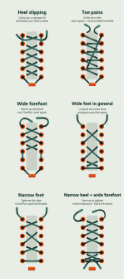
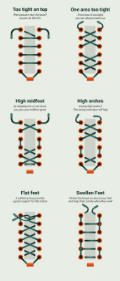
Experiment with a few different methods on your next few hikes and see if one makes a difference for you.
Socks
The final piece of your boot system may be one of the most important: Socks. Pairing your Crispi boot with a low-quality cotton sock is typically not going to yield good results. A high-quality sock can reduce hot spots and blisters caused by reducing friction. Moisture-wicking and breathability can also be increased while improving overall foot temperature and comfort. You can find socks with different levels of cushion, thickness, and height depending on your needs.
We generally do not recommend a liner and outer sock, but some folks have been using a two sock system for years with good results. Most of the time a high-quality merino blend sock will provide great results. Here at Crispi we offer three different sock options. The San Juan Lightweight Crew, The Manti Lightweight Midcalf, and The Unita Midcalf Midweight. All three models are a blend of Merino wool, Lycra, and Nylon and are made in America.
A few others we really like are the Darn Tough Hiker Micro Crew, Farm to Feet Damascus, and the SmartWool PhD Outdoor Hiking Crew. All of these socks are constructed with high-quality materials and should provide excellent performance.
Summary
Fine-tuning the fit of your boot can take a little trial and error but having a boot system dialed in and performing perfectly on the mountain is well worth the effort. Now is the time to start experimenting with different boot system pieces. Try a new outsole on some shed hunting trips. Pack a few different socks on your spring bear or turkey hunt. Take the time this spring and summer to dial in your boot system.
When you are leaving the trailhead for a spot and stalk high country deer hunt in August, or you're chasing bugles in September you will be glad you did. Nothing can be more comforting in those moments than knowing your feet won’t be talking to you. Dialing in your boot system can be a process so if you have any questions about socks, insoles, or lacing systems please feel free to give us a call.
When it comes to hunting, your boots can be the make-or-break factor in your pursuit. From navigating rugged terrain to stalking that elusive game, the right boot fit is essential for peak performance. At Crispi, we understand that fine-tuning your boot fit isn't just about finding the right size—it's about achieving harmony between your feet and your boots. Here's a guide to help you fine-tune your boot fit, ensuring your next hunt is as comfortable and successful as possible.
Did you know your feet are among the most complex structures in your body? With three arches, 26 bones, 33 joints, and over 100 tendons, muscles, and ligaments, each foot is unique. Podiatrists recognize five distinct foot shapes, and factors such as arch height, toe length, and heel shape can dramatically impact how your boots fit. Given these variables, finding the ideal hunting boot fit can feel like a challenge—but it's one worth mastering.
You might find yourself facing one or more of these common bootfit issues:
The good news? These issues can often be resolved by adjusting three key components: your insoles, socks, and lacing techniques.
Most hunting boot manufacturers, including Crispi, design insoles to accommodate a broad range of feet. However, swapping out the stock insole for a more specialized option can be a game-changer for fit and comfort. Here’s a rundown of some top-performing insoles to consider:
Tip: An insole upgrade can enhance arch support, reduce heel slip, and add cushioning, helping you tackle steep, rocky terrains without discomfort.
[Explore our selection of insoles here]
---
Did you know that changing your lacing technique can transform the way your hunting boots fit? Here are a few methods to try:
Pro Tip: Experiment with these lacing methods on your next scouting trip to find what works best for you.
Quality socks are the unsung heroes of a perfect boot fit. A high-performance sock can wick moisture, reduce friction, and keep your feet at the ideal temperature, even during demanding hunts. Avoid cotton socks and opt for moisture-wicking, breathable options made from Merino wool blends.
Our Top Picks:
Other excellent options include:
Tip: Consider carrying multiple sock options on your hunt to adapt to varying conditions.
[Browse our selection of premium hunting socks here]
Dialing in your boot fit is an investment in your hunting success. Take the time to experiment with different insoles, lacing techniques, and sock combinations during your off-season training or scouting trips. By fine-tuning your boot system now, you'll be ready to tackle challenging terrains, from high-country mule deer hunts to September elk pursuits, with confidence and comfort.
For personalized guidance on your boot fit journey, feel free to reach out to our team at Crispi. Your feet will thank you when you're miles deep into the backcountry, focused solely on the hunt.
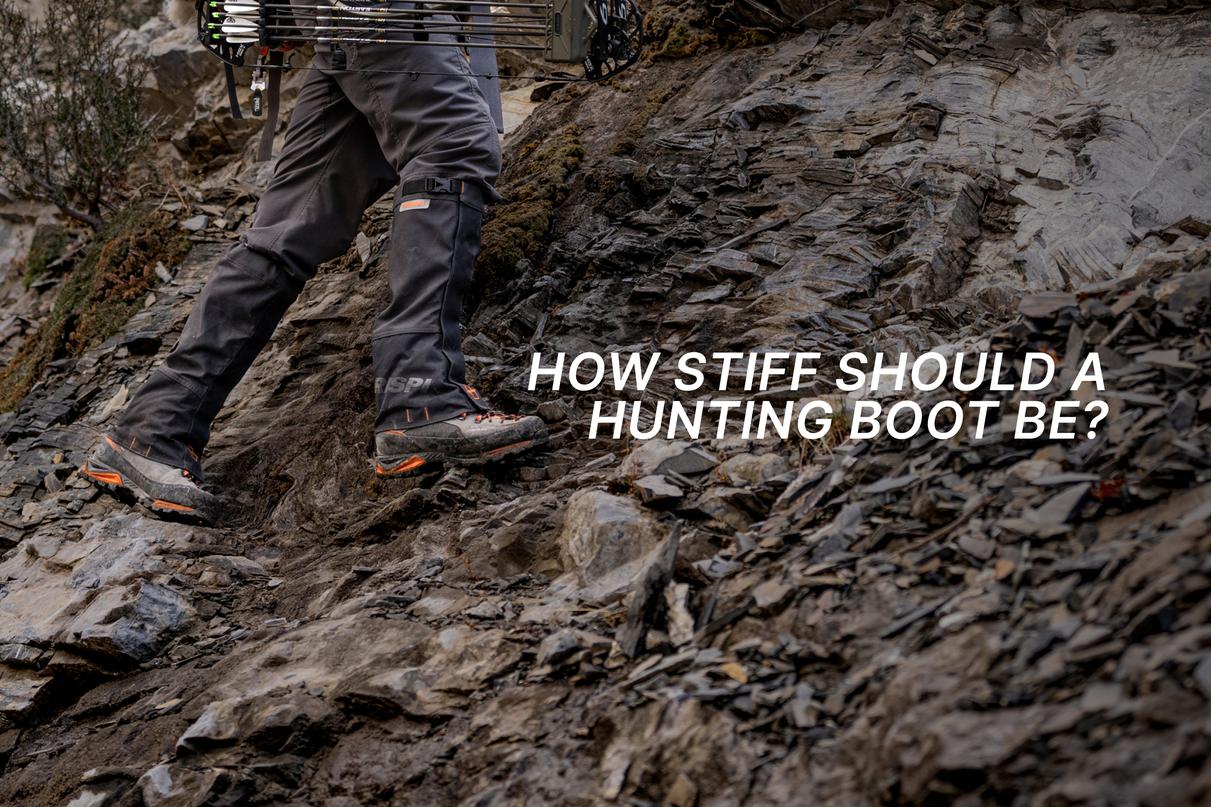
You don't need to understand how a boot is built to choose the right stiffness. You just need to know the terrain you hunt.
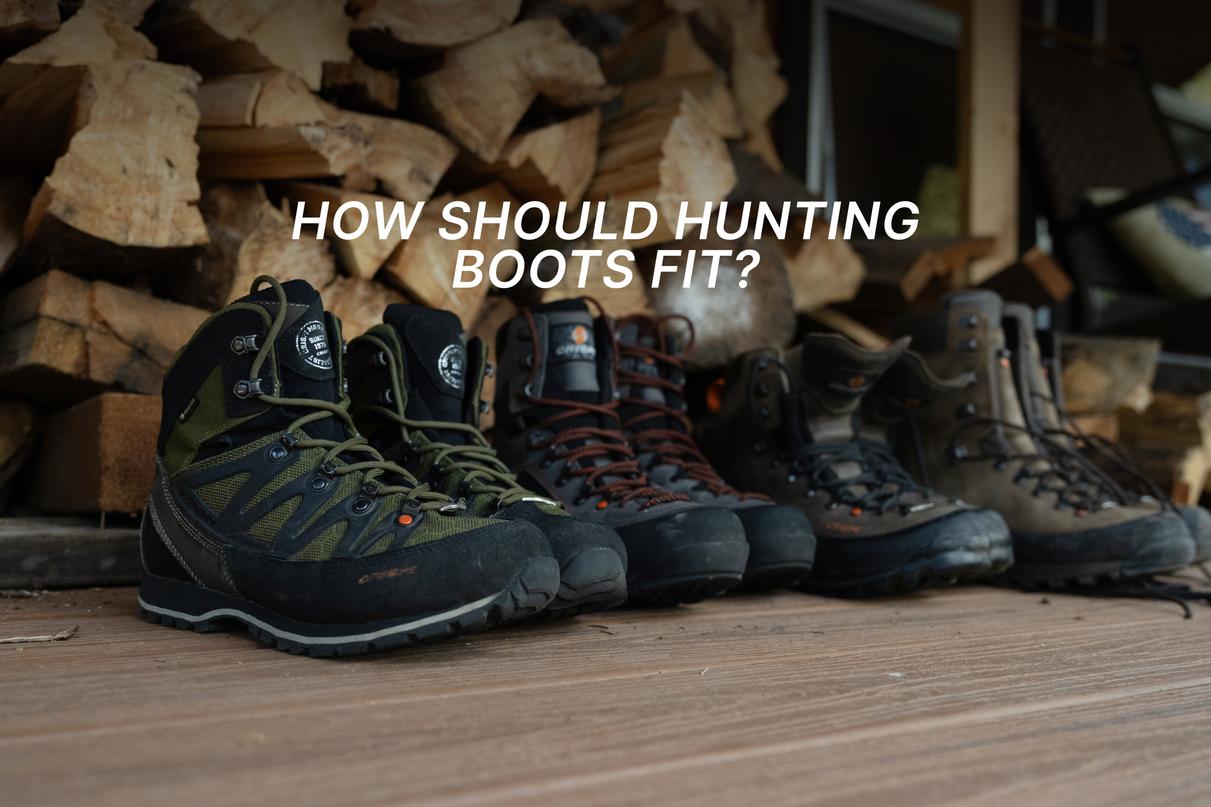
You just spent serious money on a premium pair of mountain hunting boots. You hit the backcountry, and by day two, your heels are shredded, your toes are bruised, and your hunt is compromised. Sound familiar?
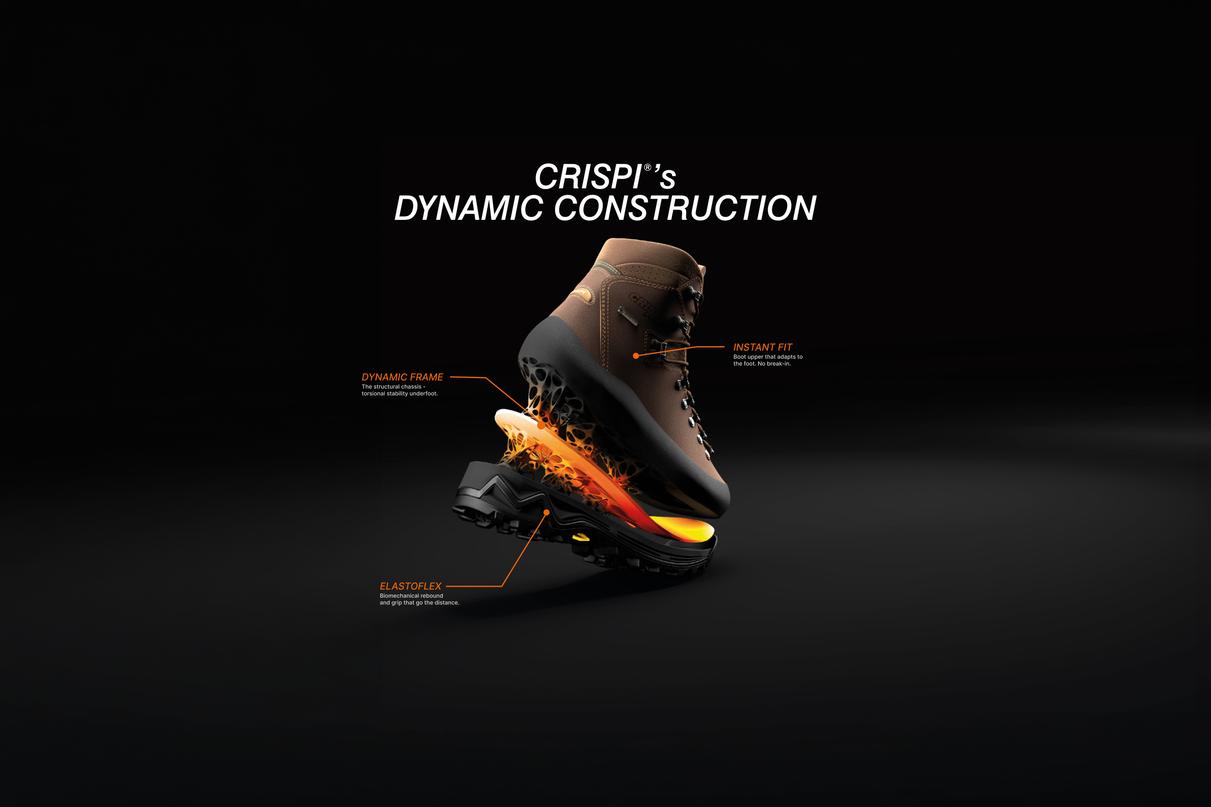
The Dynamic Frame is the foundational "chassis" of every CRISPI® boot. It serves as the essential technical link that bridges the gap between the upper’s comfort and the sole’s performance.